 English
 عربى
عربى
Room 102, Building 13, Area A, Wanyang Zhongchuang Park, Ganyao Town, Jiashan County, Zhejiang China.
News
Home / News / Industry News / Bolt Torque Calculation: The Formula, Critical Factors, and Practical Examples
A bolt that snaps during tightening and a joint that comes loose after a few weeks in service are two opposite failure modes with the same root cause: an unreliable relationship between the torque applied to the wrench and the actual clamping force created in the joint. The standard formula T = K × D × F converts torque into bolt preload, but the accuracy of that conversion depends almost entirely on two inputs: the target clamp load and the nut factor K. Get those two right, and the calculated torque produces a joint that stays tight without pushing the bolt toward yield. Get them wrong, and the same wrench setting either breaks the bolt or leaves the connection dangerously loose. This article explains the calculation, the variables that decide its accuracy, and how to manage those variables in real production and maintenance work.
Content
Every conventional bolt torque calculation uses the same relationship:
T = K × D × F
Where:
Only about 10 to 16 percent of the torque applied to the wrench ends up as clamping force. The rest is consumed by friction under the bolt head, friction between the engaged threads, and the wedging action of the thread helix. The nut factor exists to capture all of those losses in a single empirical number. It is not a material constant, and it cannot be looked up once and reused everywhere. That is the most common mistake in bolt torque calculation.
The target preload is the force that actually holds the joint together. It must be high enough to keep the joint closed under service loads, but low enough to stay below the yield strength of the bolt material. The standard approach is to work from the proof load of the bolt.
Proof load = proof strength × tensile stress area (As)
For most structural and machinery joints, the target preload is set at 75 percent of proof load for non-permanent joints and up to 90 percent for permanent joints where the bolt will not be removed. Gasketed joints usually stay between 50 and 60 percent to protect the seal from excessive compression.
| Size | Tensile stress area As (mm2) | Grade 8.8 proof load (kN) | Grade 10.9 proof load (kN) |
|---|---|---|---|
| M8 | 36.6 | 21.2 | 30.4 |
| M10 | 58.0 | 33.6 | 48.1 |
| M12 | 84.3 | 48.9 | 70.0 |
| M16 | 157 | 91.0 | 130 |
| M20 | 245 | 142 | 203 |
Strength grades define how much load a bolt can carry before permanent deformation. A grade 8.8 bolt has a proof strength of approximately 580 MPa, grade 10.9 about 830 MPa, and grade 12.9 about 970 MPa. Higher grades allow a higher preload in the same bolt size, but they also make accurate tightening more critical because the gap between the target preload and the yield point narrows.
The nut factor is the largest source of uncertainty in any bolt torque calculation. Bolt size and target preload can be determined with reasonable confidence, but K changes with surface treatment, lubrication, thread tolerance, tightening speed, and even the number of times the fastener has been used. A small shift in K produces a large shift in the torque required to reach the same clamp load.
| Surface condition | Nut factor K range |
|---|---|
| Plain steel, clean and dry | 0.20 – 0.25 |
| Zinc-plated, dry | 0.25 – 0.35 |
| Zinc-plated, lightly lubricated | 0.18 – 0.22 |
| Black oxide, oiled | 0.15 – 0.20 |
| Phosphate and oil | 0.16 – 0.20 |
| Stainless steel, dry | 0.30 – 0.40 |
These ranges are starting points, not guaranteed values. Plating thickness, lubricant type, and thread finish all shift the result for a specific batch of fasteners. A manufacturer that controls its own coating and threading process can provide torque guidance based on actual production parts, which is considerably safer than relying on a generic table.
Consider an M10 x 1.5 bolt in grade 8.8, zinc-plated and lightly lubricated, installed in a non-permanent structural joint. The calculation proceeds in five steps.
The calculated torque is approximately 50 N·m. Now repeat the last step with K = 0.30, which is realistic for the same zinc-plated bolt in a dry condition: T = 0.30 × 0.010 × 25,230 = 75.7 N·m. The torque rises by 50 percent even though the target clamp load is unchanged. This is why copying a torque value from a general chart is risky; the same bolt can require very different torque settings depending on how it is coated and lubricated.
Machinery assemblies that use black-oxide grade 8.8 hex head bolts follow the same calculation path, but the coating changes the nut factor. A black-oxide bolt with a light oil film typically falls in the 0.15 to 0.20 range, which lowers the required torque for the same preload.
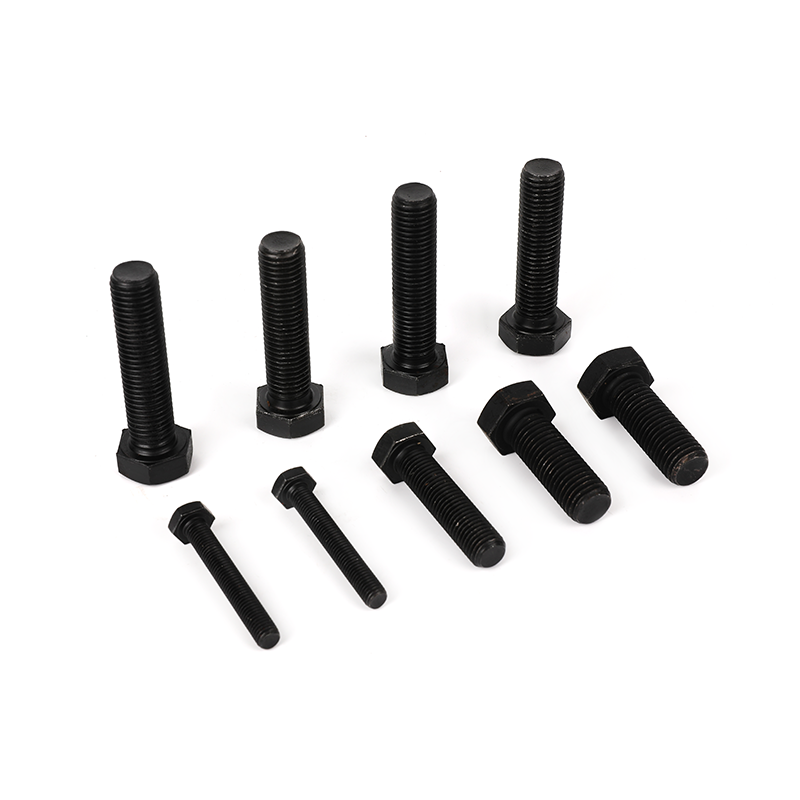 Grade 8.8 Black Oxide Full-Thread Hex Head Bolts for Controlled PreloadThese hex head bolts use a black-oxide coating that shifts the nut factor to about 0.15–0.20 with light oil, enabling accurate torque-to-preload calculations. Consider them when assembly conditions and coating effects matter.View Product →
Even a correctly calculated torque value can fail on the assembly line if the installation conditions are not controlled. The following factors regularly cause the measured clamp load to differ from the calculated value.
Vibration is a separate problem that torque alone cannot solve. If a joint loses preload in service despite a correct initial torque, the cause is often sliding or bending that friction cannot resist. Understanding why hex bolts loosen during use helps separate a preload problem from a joint design problem.
Standard tables cover common hex bolts, but many industrial applications use fasteners that do not behave like a standard bolt. Three groups show where the calculation must be adapted.
A flange bolt distributes clamping pressure over a wider bearing area, which reduces embedding loss and improves preload retention. Antislip textures add friction that resists rotation and makes the joint more stable under dynamic loads. The torque formula still applies, but the nut factor must be established for the actual flange geometry and surface treatment. A grade 10.9 zinc-plated flange bolt with antislip texture is a typical example, and its torque specification should come from tests on the real plated surface rather than from a hex bolt chart.
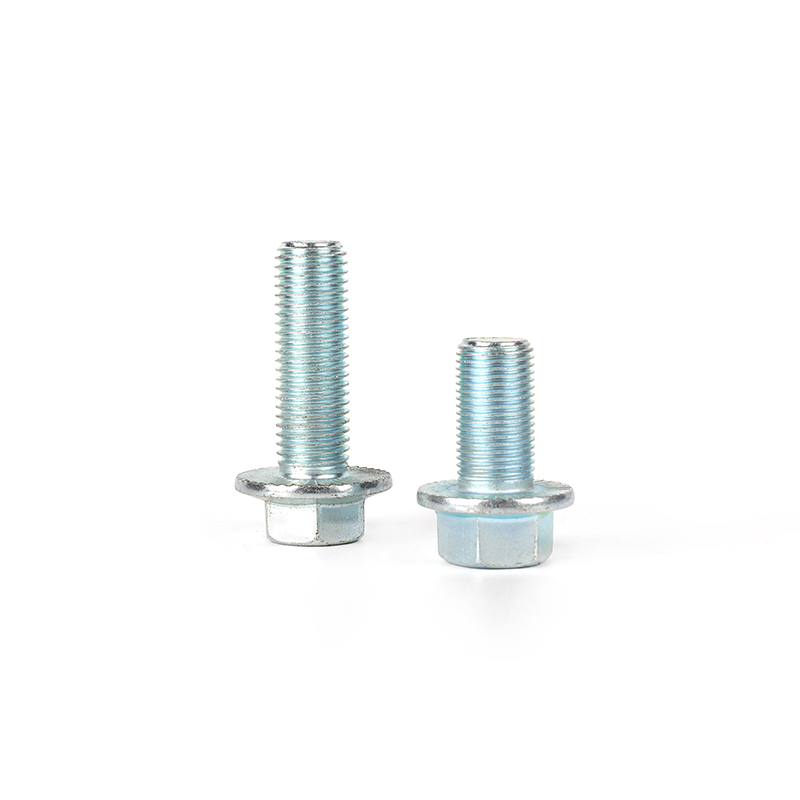 Grade 10.9 Zinc Plated Flange Bolts with Anti-Slip TextureFlange bolts distribute clamping pressure over a wider bearing area, and the anti-slip texture adds friction for joint stability under dynamic loads. This example highlights why torque specifications must be validated on the actual plated surface.View Product →
Photovoltaic mounting structures often use grade 12.9 bolts because the high proof strength provides strong clamping in compact dimensions. The practical window for the calculation is narrow: at 75 percent of proof load, a 12.9 bolt is stressed to roughly 970 MPa, and an overtightening of 10 to 15 percent can push the material toward yield. Verified nut factors and calibrated tools are essential in this application. Grade 12.9 zinc-plated countersunk head square neck plow bolts used in PV structures are a good illustration of fasteners that require this level of control.
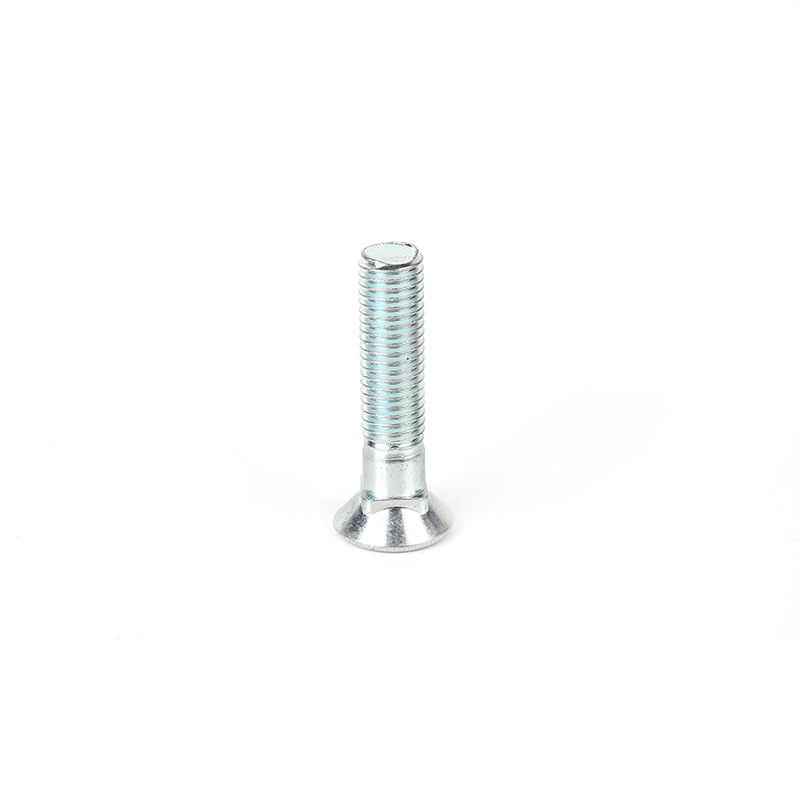 Grade 12.9 Zinc Plated Countersunk Square Neck Plow BoltsHigh-strength 12.9 plow bolts are stressed near 970 MPa at 75% proof load, requiring verified nut factors and calibrated tools. Their countersunk square-neck design suits photovoltaic mounting structures where precise clamping is critical.View Product →
Hollow bolts, such as oil pipe screws with internal passages, have a reduced effective cross-section. The tensile stress area of a solid bolt of the same nominal size overestimates the load capacity, so the standard calculation produces an unsafe preload. The actual stress area of the hollow section must be measured, or a tensile test must be performed, before a torque specification can be trusted.
Start every bolt torque calculation from the proof load of the bolt material, not from a chart value. Define the target preload from the bolt grade and stress area, select a nut factor that matches the exact coating and lubrication state, and validate the result on a sample batch whenever the joint is safety-related.
For critical joints, torque-angle control is more reliable than torque alone. Run the fastener to a low snug torque, then advance the nut by a defined rotation angle. This method depends far less on the nut factor and produces a more consistent preload across normal variations in coating and lubrication.
When a project requires a nonstandard head shape, a special thread form, or a strength grade outside common tables, standard formulas lose their basis. At that point, the fastest route to a trustworthy specification is working directly with the fastener producer. For projects that need custom fastener manufacturing, discussing the design with the factory is the shortest path to a torque specification that works on the production floor.
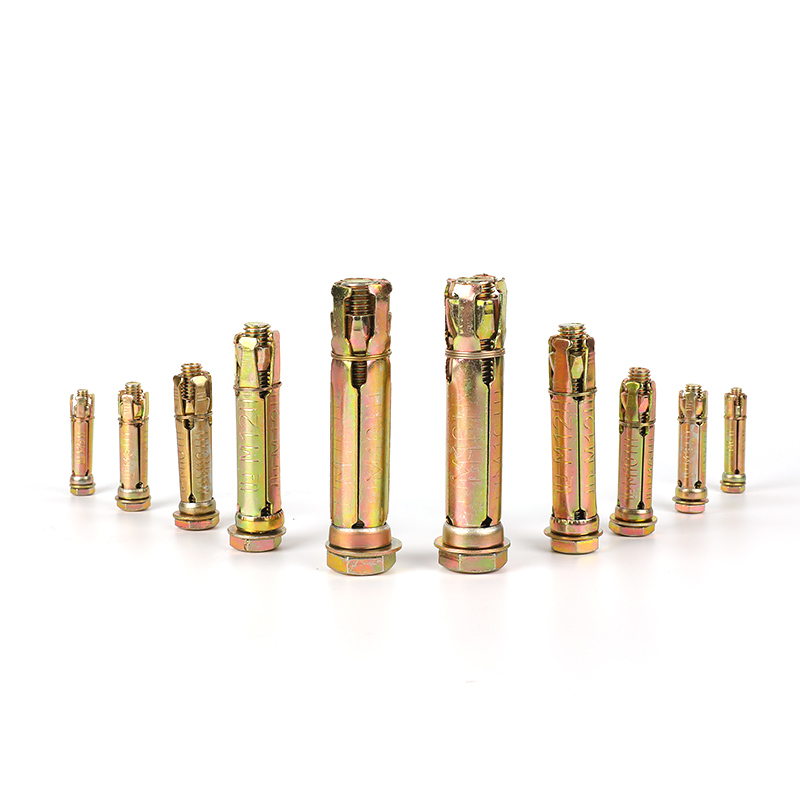
Fix anchorbolts include bolts, washers, nuts and 4PCS cylindrical shields. By tightening the bolts, the shields tubes expand and the components can be...
See Details
Flange bolts are specially used to tightly connect pipes and components with flanges. We produce flange bolts are solid t and durablethat, compling wi...
See Details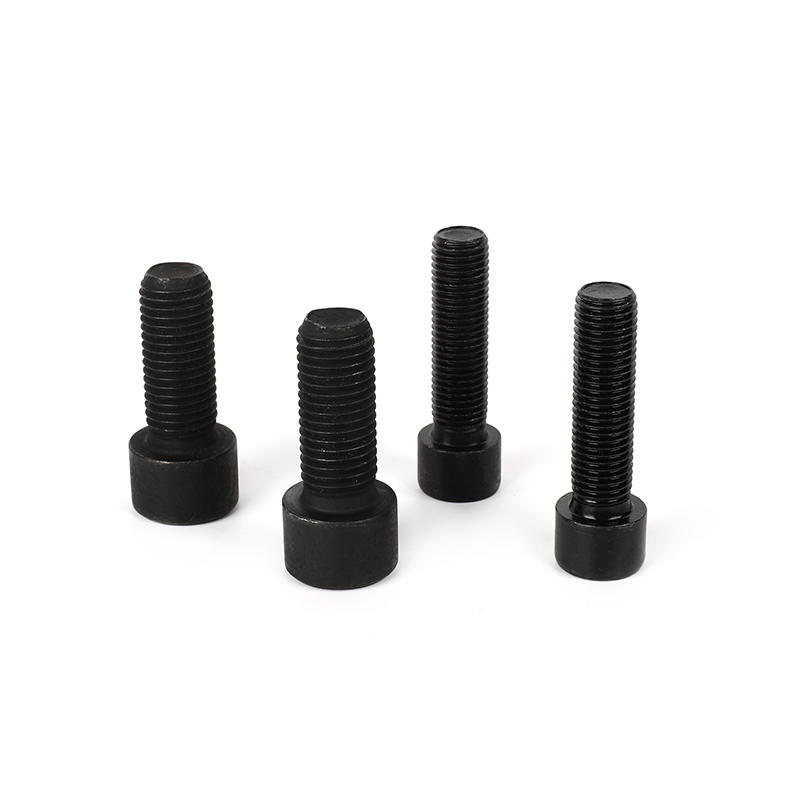
The Grade 8.8 black oxide full-thread hexagon socket bolts have an internal hex design and needs to be used with a wrench with a hex head. Its full th...
See Details
Grade 8.8 black oxide full-thread hexagon bolts is a very common fastener and requires a wrench or hex wrench to tighten it. Our hex head bolt meet th...
See Details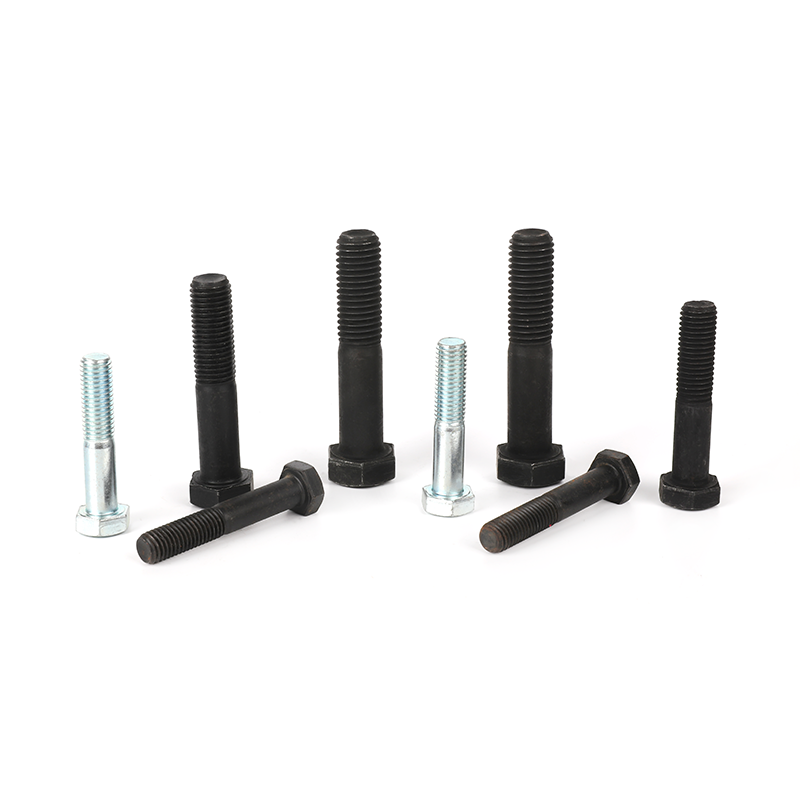
This product is made of high-quality carbon steel and undergoes a rigorous heat treatment process. It has high strength, good elasticity and toughness...
See Details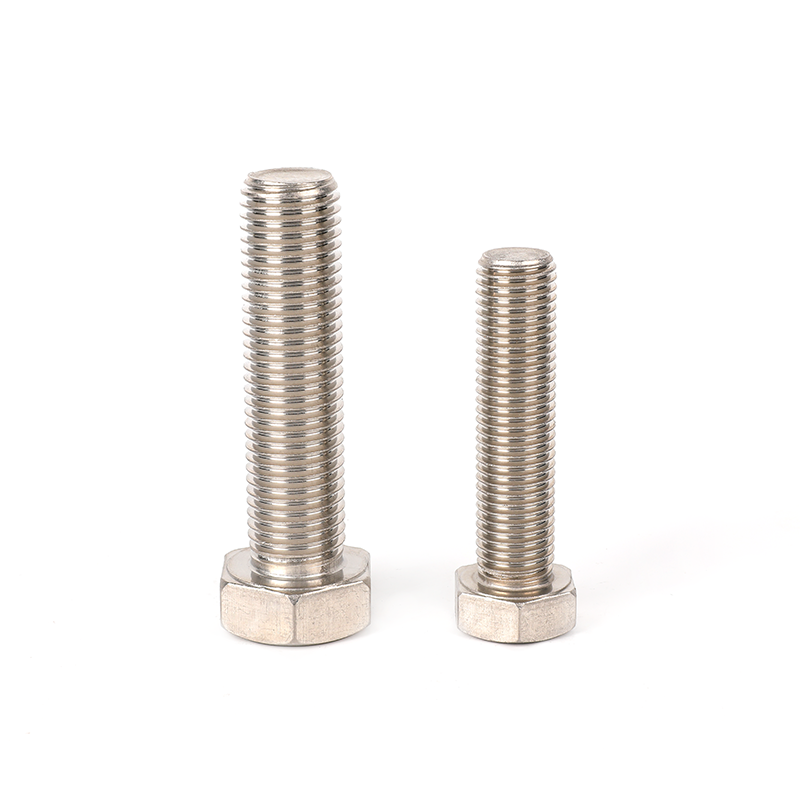
This 304 stainless steel plain full-thread hexagon bolt is a kind of fasteners made of high-quality stainless steel material and has corrosion resista...
See Details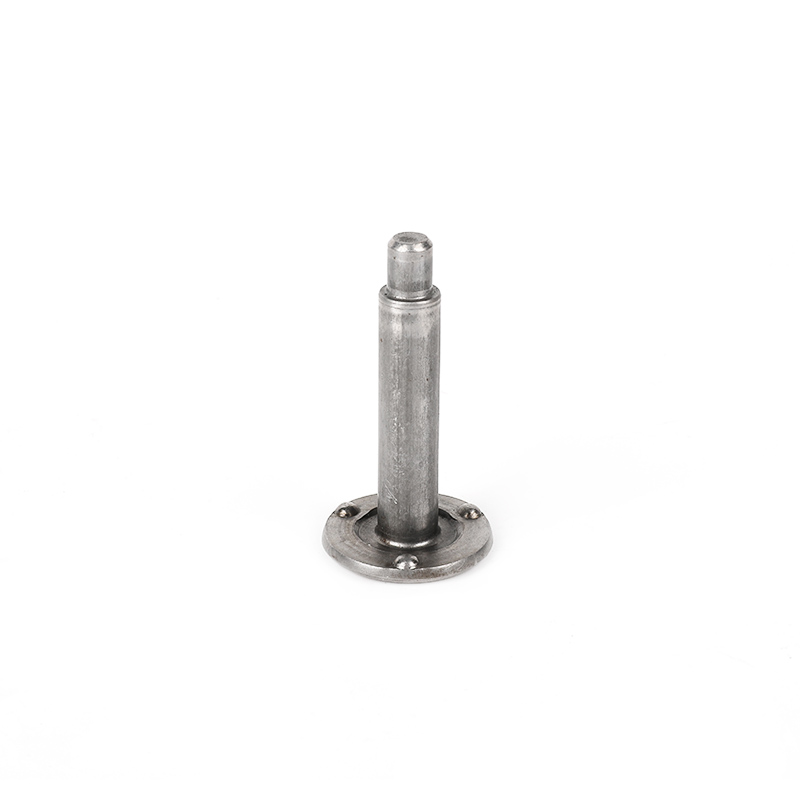
This plain round flat head weld shoulder bolt is a fastener suitable for a variety of welding applications. Its flat head and round head design makes ...
See Details
This Grade 12.9 zinc plated countersunk head square neck plow bolt has the advantages of high precision, high operability, high strength, and high ten...
See Details
Room 102, Building 13, Area A, Wanyang Zhongchuang Park, Ganyao Town, Jiashan County, Zhejiang China.
+86-17858810290
+86-573-84648787
product
mobile
