 English
 عربى
عربى
Room 102, Building 13, Area A, Wanyang Zhongchuang Park, Ganyao Town, Jiashan County, Zhejiang China.
News
Home / News / Industry News / Bolt Names Explained: Types, Grades, Finishes & How to Specify Fasteners
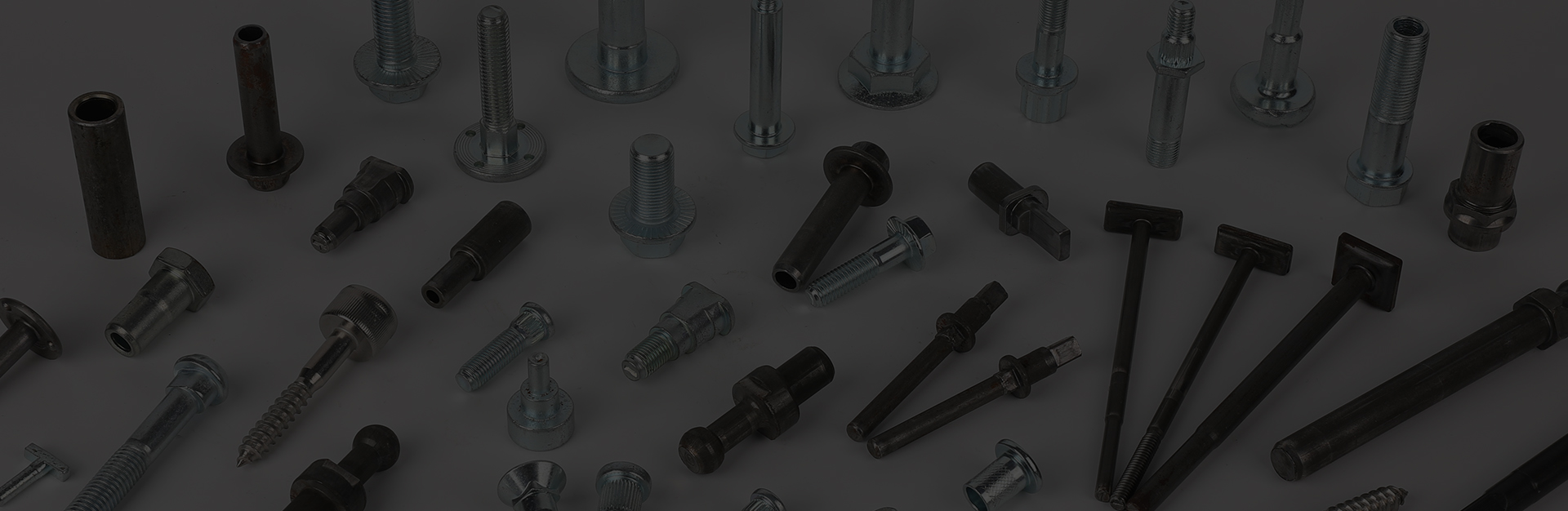
A maintenance engineer pulls a replacement part list and finds "grade 8.8 zinc-plated full-thread hex bolts." A solar installer's drawing calls for "perforated flat-head hex neck bolts." A purchasing agent receives a request for "hollow oil-pipe screws." All three are bolt names, and each one is a compact specification that tells the reader what the fastener is, what it is made of, and what job it can do. For anyone who specifies or buys fasteners, knowing how bolt names are structured prevents mismatched orders, failed joints, and costly downtime.
Content
Bolt names are not arbitrary labels. They compress several engineering decisions into a few words. Head shape tells you how the bolt is driven and how load spreads across the joint. Thread form tells you how the bolt engages with its mating part. Material and strength grade tell you whether the bolt can handle the expected loads. Surface finish tells you how the bolt resists corrosion and friction.
A complete bolt name works like a checklist. When you can interpret every element, you can compare products from different suppliers, spot inconsistencies, and describe your requirement clearly.
The majority of standard bolt names begin with the head shape, because the head determines which tool drives the fastener and how force is distributed.
Each head shape exists to solve a specific assembly problem. Choosing the correct head type is usually the first decision in bolt selection. For general mechanical fastening, a grade 8.8 black oxide full-thread hex bolt balances strength, cost, and dimensional accuracy, which is why it remains a default choice in many workshops.
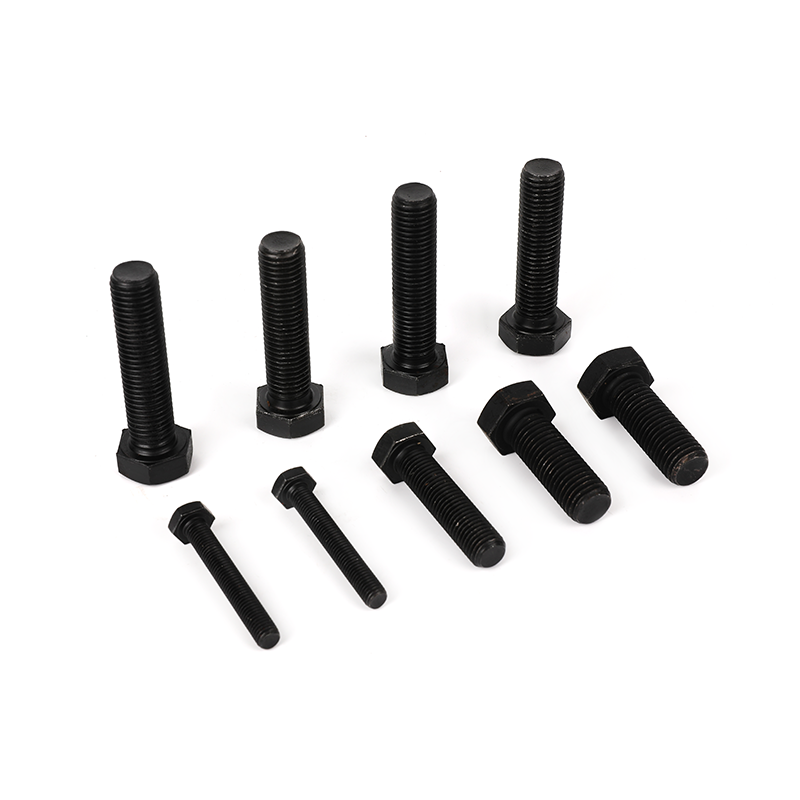 Grade 8.8 Black Oxide Full-Thread Hex Bolts with Wrench FitThis common hex head bolt combines strength, cost, and accuracy, making it a reliable default for general mechanical fastening. Its full thread and black oxide finish suit workshop use where a wrench is required for tightening.View Product →
Some bolts are named after the task they perform rather than the shape of their head.
Function-based names matter because they tie a fastener to a specific application. An anchor bolt, for example, is not interchangeable with a hex bolt, even if the threads are the same size.
Bolt names frequently include the material and strength class, because these determine whether a joint remains secure under load.
Carbon steel is the most economical option for general industry. Stainless steel, commonly 304, is selected for outdoor and corrosive environments. Low alloy steel is used when higher strength is needed after heat treatment.
Strength grades follow recognized standards. A grade 8.8 bolt is a medium-strength carbon steel fastener suitable for general machinery and structural joints. Grade 10.9 bolts are specified for heavy equipment and automotive assemblies. Grade 12.9 bolts provide the highest clamp load and are used in critical bolted joints.
| Name element | Information conveyed | Example |
|---|---|---|
| Head type | Tool engagement and load distribution | Hex head, flange head, socket head |
| Thread form | Engagement length and flexibility | Full-thread, partial-thread, reduced shank |
| Material | Composition and corrosion resistance | Carbon steel, 304 stainless steel, low alloy steel |
| Strength grade | Load capacity and heat treatment | 8.8, 10.9, 12.9 |
| Surface finish | Corrosion protection and friction | Zinc plated, black oxide, plain |
Reading the strength grade is not optional. Placing a grade 8.8 bolt where a grade 12.9 part is specified can lead to fastener loosening or fracture under vibration and peak loads.
The finish is the last common element in a bolt name, and it changes how the fastener performs in service.
The finish affects more than appearance. It changes friction during tightening, which influences how much torque is needed to achieve the intended clamp load.
Nonstandard fasteners often carry names that come from the industry they serve rather than generic engineering terms.
In photovoltaic mounting systems, bolts such as perforated flat-head hex neck bolts and T-shaped square-head bolts are used to clamp solar panels to support rails. The head and neck geometry is designed to fit extruded aluminum profiles and resist axial pull-out.
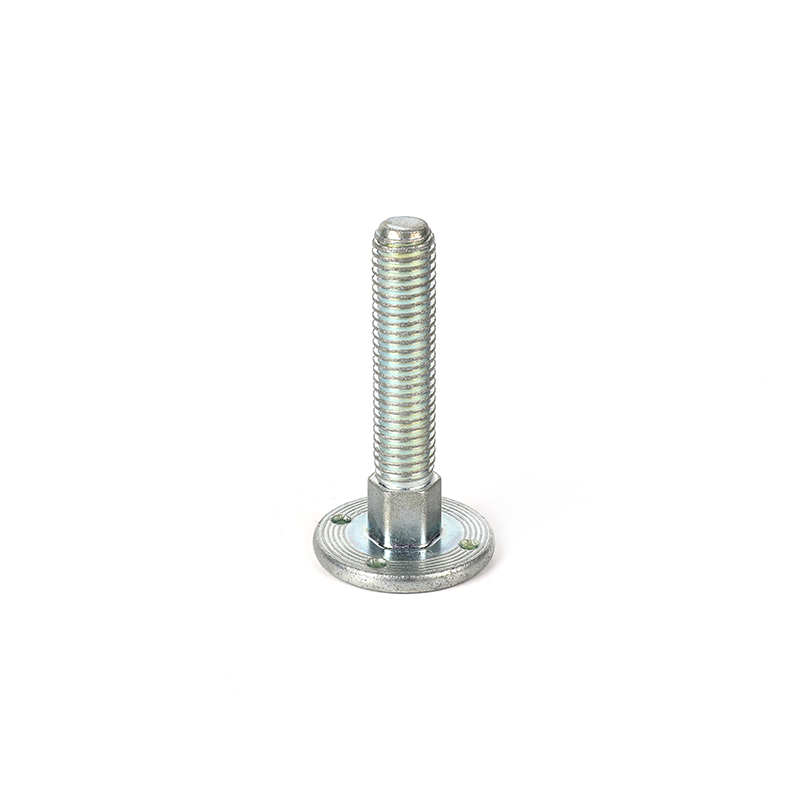 Custom Perforated Flat-Head Hex Neck Bolts for Solar MountingThese special-shaped bolts feature a perforated head and hex neck, designed for photovoltaic rail systems. The geometry resists axial pull-out and allows other fasteners to pass through, fitting extruded aluminum profiles.View Product →
In automotive manufacturing, wheel hub bolts with antislip knurled heads and stepped shoulder bolts for electric vehicle support brackets are named after the components they secure. The knurling locks into the mating part, preventing loosening from road vibration.
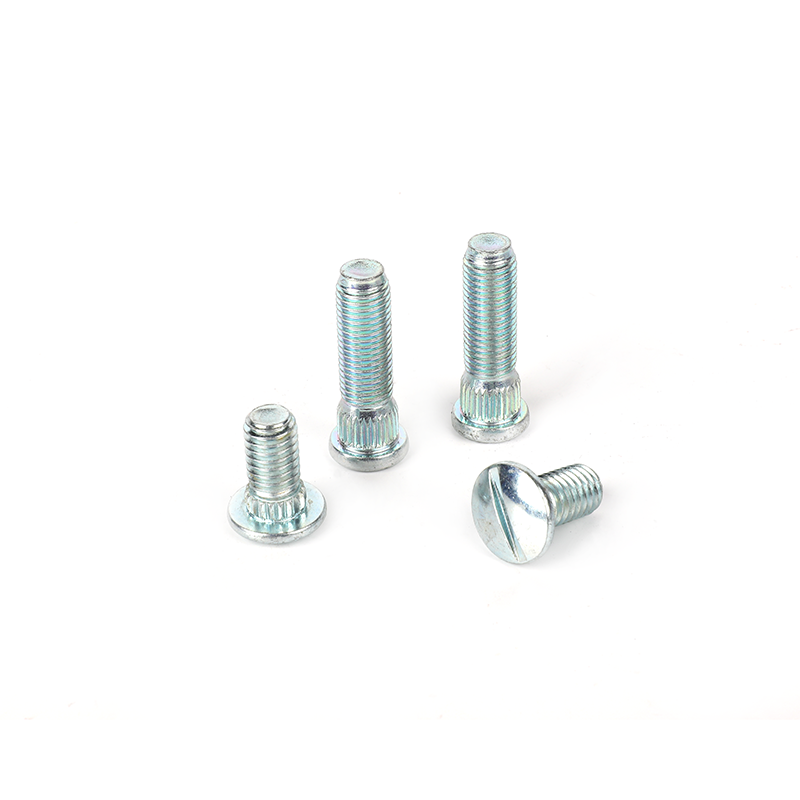 Anti-Slip Wheel Hub Screws with Knurled Flat HeadEngineered for car hubs, these bright zinc plated screws have a knurled flat head to prevent loosening from vibration. The larger contact area distributes pressure evenly, offering reliable fastening in automotive applications.View Product →
In oil and hydraulic systems, hollow bolts allow fluid to pass through the center of the fastener. Names such as hollow hex head bolt or hollow flange bolt describe both the external shape and the internal channel that enables oil flow.
These custom names become a shared language between the design engineer and the manufacturer. A bolt name such as "12.9 zinc-plated countersunk square-neck plow bolt" tells the factory the head form, the neck type, the material grade, the finish, and the origin of the design all at once.
When you are ready to order, a complete bolt name makes the process fast and accurate. The most effective way to describe a fastener is to follow the same structure that manufacturers use:
For standard bolts, these five elements identify almost any part. For custom components, the same structure helps the factory understand your requirement. If a standard bolt name does not exist for the part you need, describe the geometry, include a drawing, and send it to a manufacturer that offers custom fastener solutions.
Working directly with a fastener factory also helps you adjust materials, grades, and finishes before production starts. A manufacturer with over 15 years of production experience can review your application and suggest a bolt name and specification that matches both your load requirements and your budget.
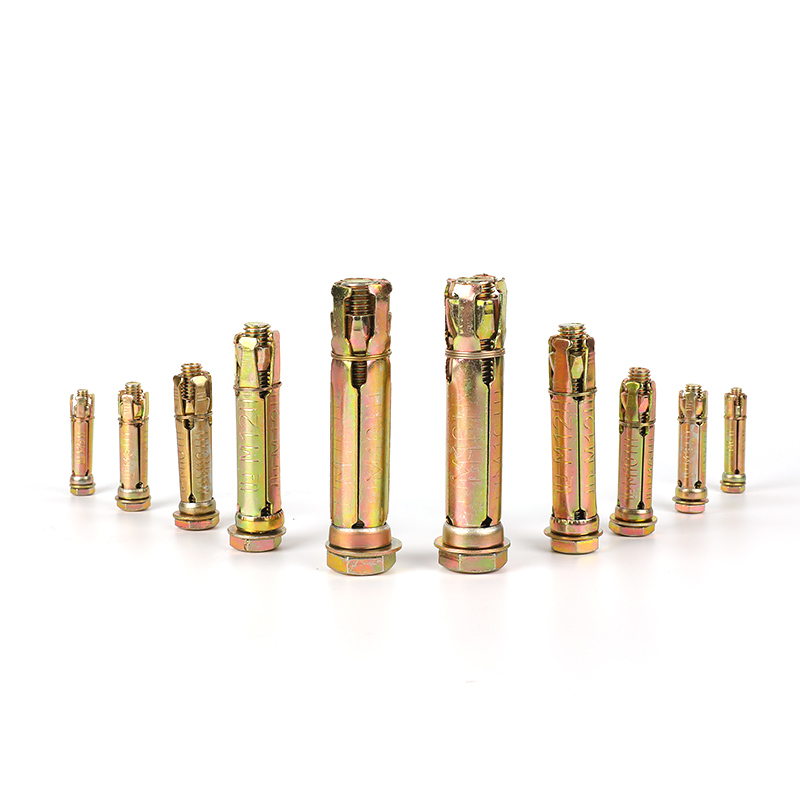
Fix anchorbolts include bolts, washers, nuts and 4PCS cylindrical shields. By tightening the bolts, the shields tubes expand and the components can be...
See Details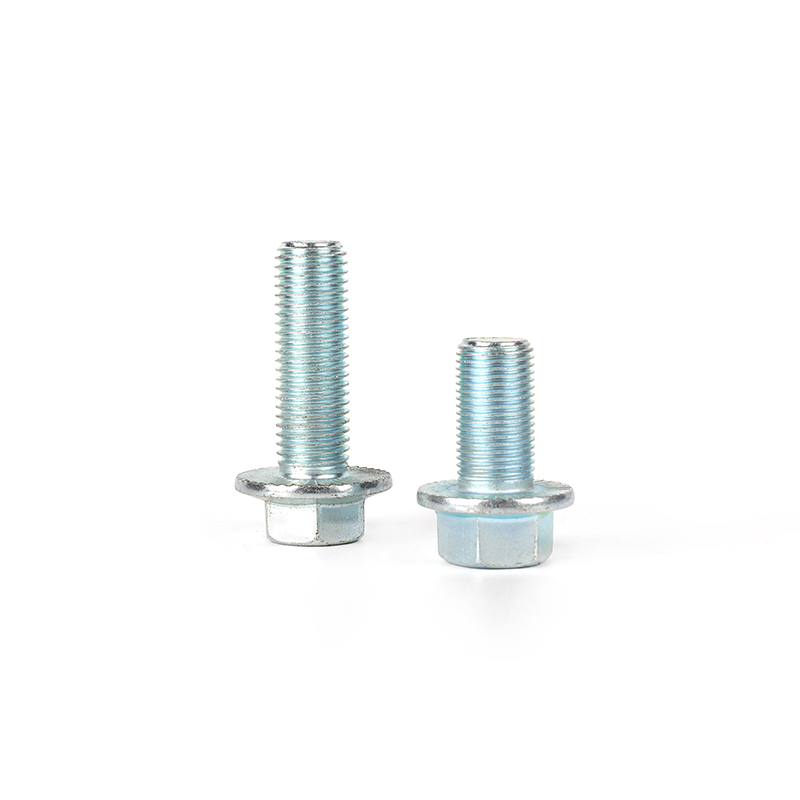
Flange bolts are specially used to tightly connect pipes and components with flanges. We produce flange bolts are solid t and durablethat, compling wi...
See Details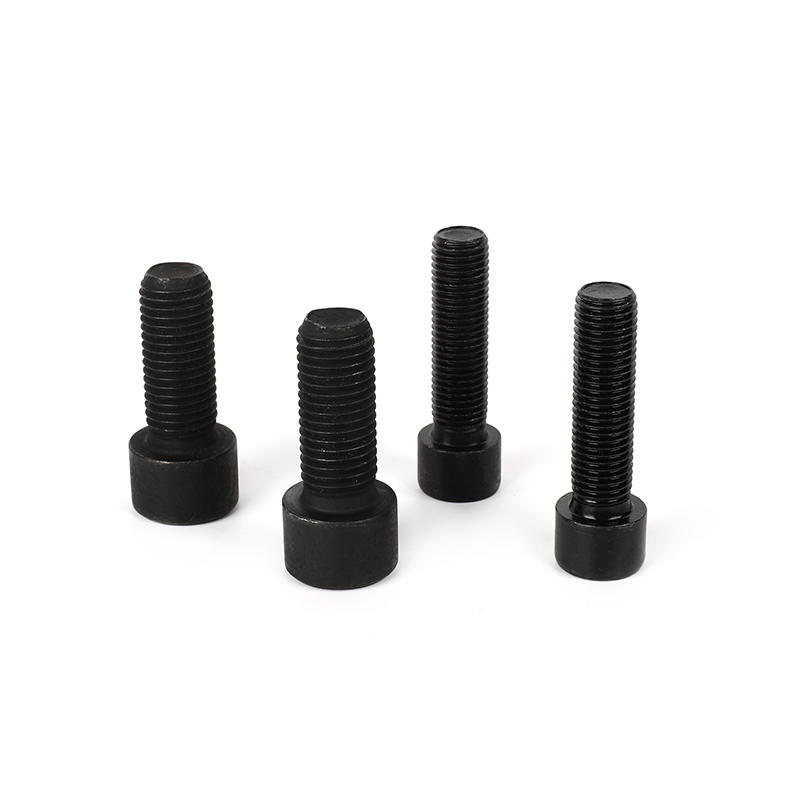
The Grade 8.8 black oxide full-thread hexagon socket bolts have an internal hex design and needs to be used with a wrench with a hex head. Its full th...
See Details
Grade 8.8 black oxide full-thread hexagon bolts is a very common fastener and requires a wrench or hex wrench to tighten it. Our hex head bolt meet th...
See Details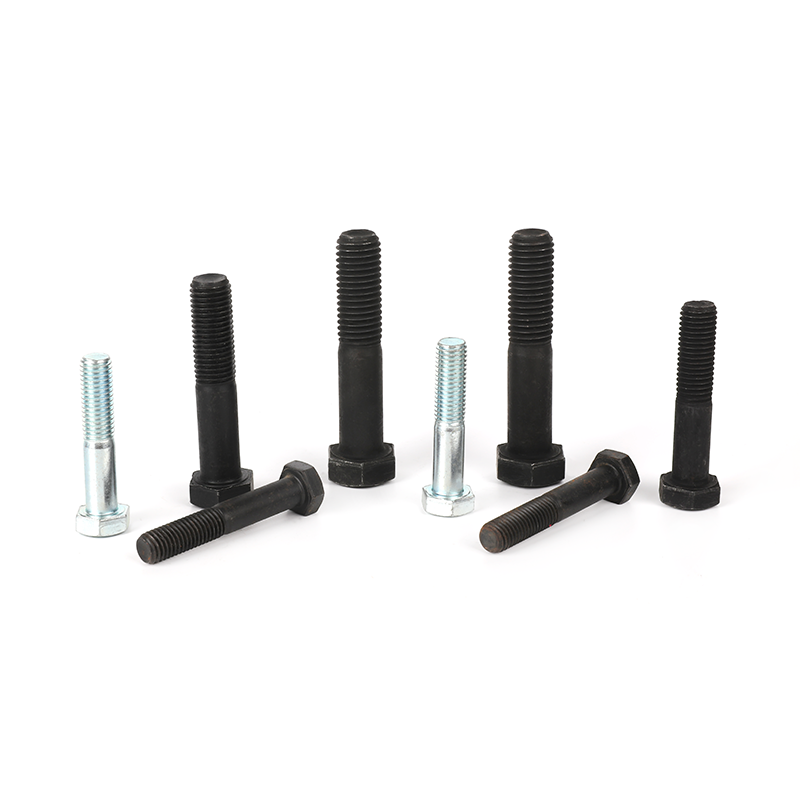
This product is made of high-quality carbon steel and undergoes a rigorous heat treatment process. It has high strength, good elasticity and toughness...
See Details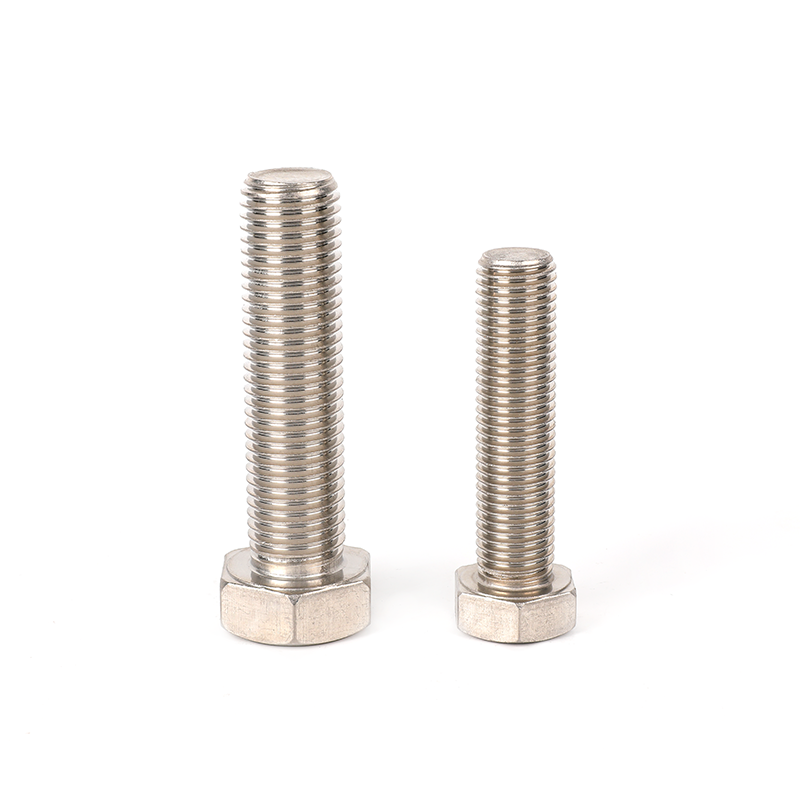
This 304 stainless steel plain full-thread hexagon bolt is a kind of fasteners made of high-quality stainless steel material and has corrosion resista...
See Details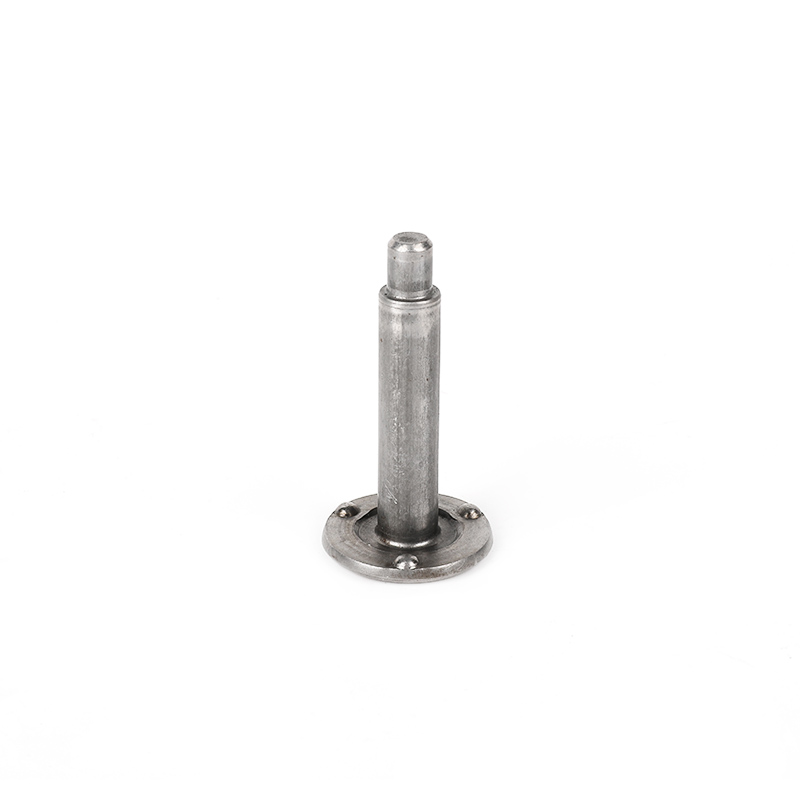
This plain round flat head weld shoulder bolt is a fastener suitable for a variety of welding applications. Its flat head and round head design makes ...
See Details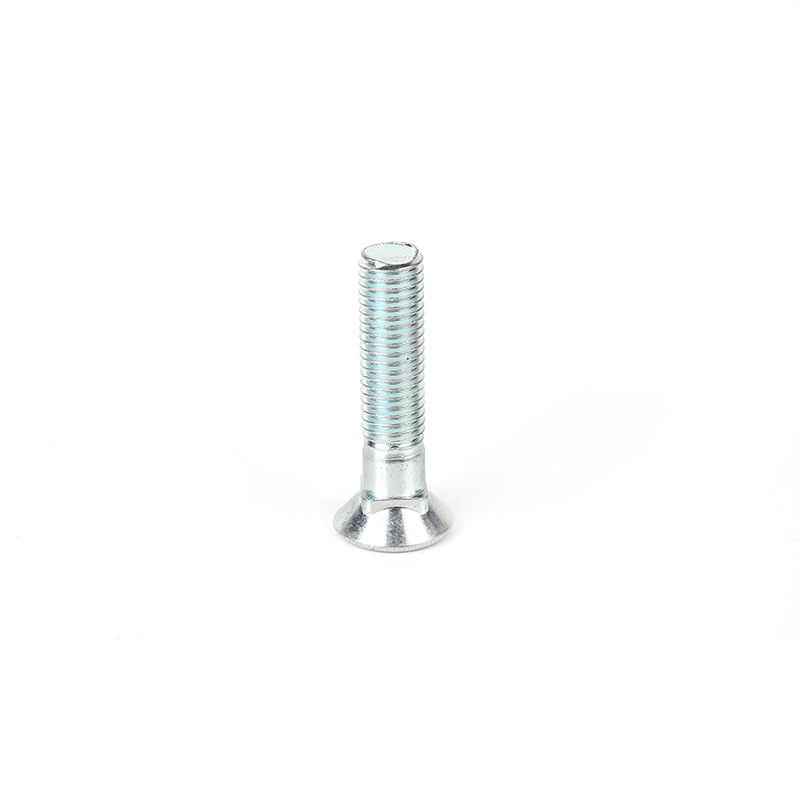
This Grade 12.9 zinc plated countersunk head square neck plow bolt has the advantages of high precision, high operability, high strength, and high ten...
See Details
Room 102, Building 13, Area A, Wanyang Zhongchuang Park, Ganyao Town, Jiashan County, Zhejiang China.
+86-17858810290
+86-573-84648787
product
mobile
