 English
 عربى
عربى
Room 102, Building 13, Area A, Wanyang Zhongchuang Park, Ganyao Town, Jiashan County, Zhejiang China.
News
Home / News / Industry News / Bolt Types Explained: How to Choose the Right Bolt for Any Application
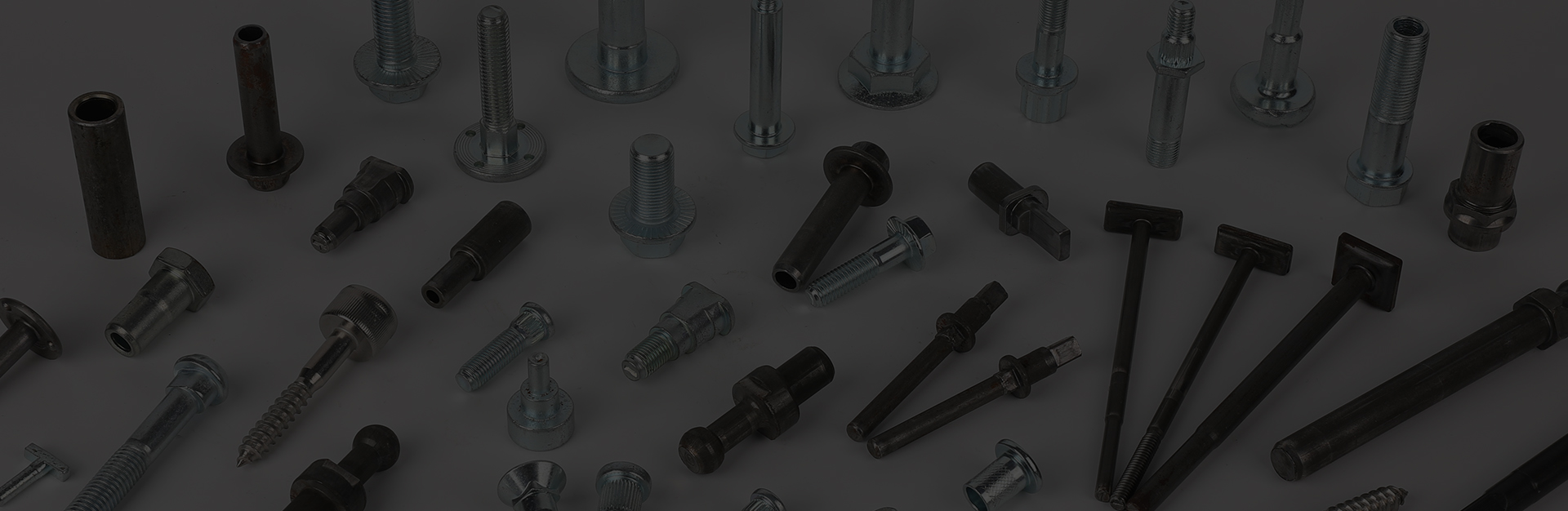
An anchor bolt that fails after two years in an outdoor concrete foundation is rarely a strength problem. The steel grade was fine, the torque was correct, and the load never came close to the yield point. What failed was the specification: a fastener chosen for its high tensile numbers but given a finish that could not hold up to the moisture sitting around the base of the structure.
The practical conclusion is simple. Selecting bolt types means making four decisions in order: head shape, thread form, material grade, and surface finish. Get those four right, and the fastener will outlast the equipment it holds. Get them wrong, and you will be back with a cutting torch or a breaker bar long before the design life is over.
Content
Bolt types are defined mainly by the head. The head determines which tool drives the bolt, how the clamping load spreads, and whether the bolt can sit flush or needs clearance above the joint. The table below summarizes the types that dominate machinery, structural steel, and site installation work.
| Bolt type | Signature feature | Common applications |
|---|---|---|
| Hex bolt | Six-sided external head | General machinery, structural connections, field assembly |
| Flange bolt | Hex head with integrated washer | Automotive joints, high-vibration equipment |
| Carriage bolt | Dome head with square neck | Timber connections, metal-to-wood joints |
| Anchor bolt | Embedded or expansion base | Concrete foundations, structural mounting |
| Socket head bolt | Cylindrical head, internal hex drive | Tight spaces, precision assemblies, high torque |
| Plow bolt | Countersunk flat head with square neck | Wear plates, cutting edges, PV mounting frames |
| T-head bolt | Flat rectangular head | Machine slots, channel rails, PV racking clamps |
| Shoulder bolt | Precision-ground unthreaded shoulder | Pivot points, rollers, sliding linkages |
| Eye bolt | Closed loop head | Lifting, rigging, tie-down points |
| U-bolt | U-shaped bent rod with threads at both ends | Pipe clamps, suspension, cable retention |
Hex bolts are the default in most steel and machinery connections. A six-sided head accepts a socket or wrench from almost any angle and provides a large flat bearing surface. They are available with full threads, which maximize grip length, or with a partial thread whose smooth shank resists shear better in structural joints. Flange bolts take the same concept further by forging an integrated washer under the head. The wider bearing area spreads the clamp load, and the serrated version resists loosening under vibration. When exposed joints need both high clamp load and slip resistance, a zinc-plated grade 10.9 flange bolt is a dependable specification.
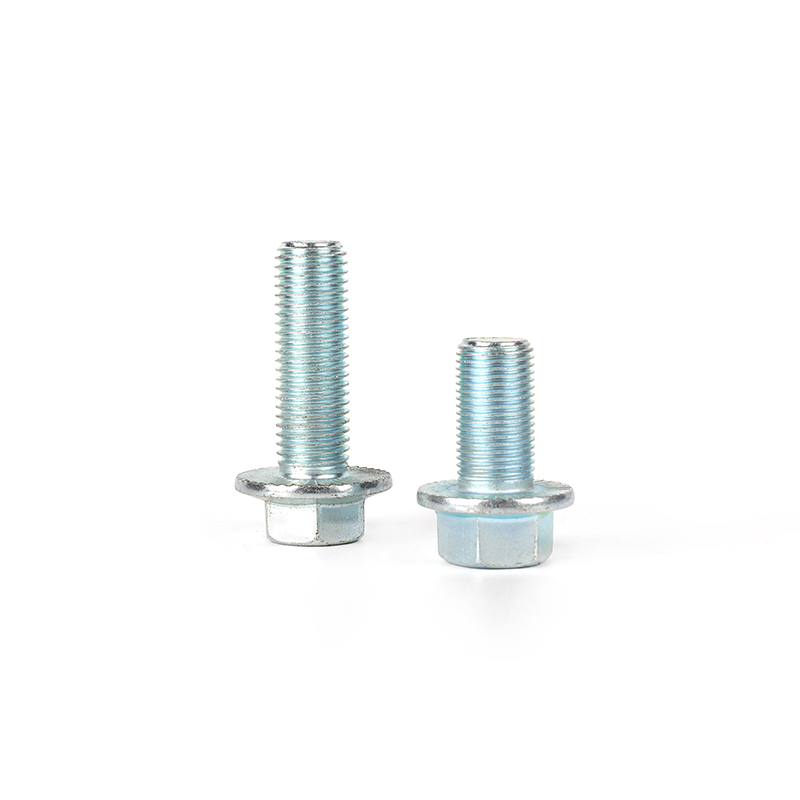 Grade 10.9 Zinc Plated Flange Bolts with Anti-Slip TextureThese high-strength flange bolts feature an integrated washer and serrated bearing surface, providing reliable clamp load and vibration resistance for exposed steel joints and flange connections.View Product →
Anchor bolts transfer structural loads into concrete. Cast-in-place anchors are placed in wet concrete, while expansion anchors go into a drilled hole and wedge mechanically as the nut is torqued. A carbon steel, zinc-plated heavy-duty fix anchor bolt is the standard solution for handrails, brackets, and equipment mounting on concrete floors and walls.
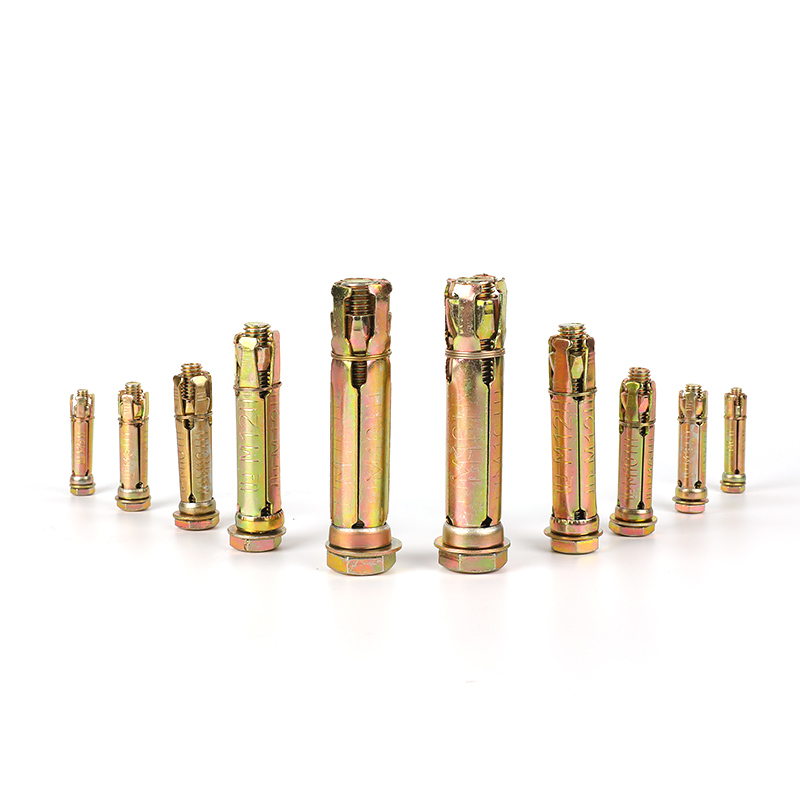 Carbon Steel Zinc Plated Heavy-Duty Fix Anchor Bolts (4-Piece Set)Each set includes bolts, washers, nuts, and cylindrical shields that expand upon tightening, offering dependable fastening into concrete for handrails, brackets, and equipment mounting.View Product →
Carriage bolts have a rounded head plus a square neck that bites into the timber, so you only need one wrench on the nut side. Plow bolts use the same square-neck principle but with a countersunk flat head that sits flush in a recess; they are widely used on wear plates, cutting edges, and photovoltaic mounting frames. T-head bolts slide into a T-slot or channel rail and appear in machine fixtures, clamps, and solar racking. When flush seating and high tensile strength have to come together, a grade 12.9 zinc-plated plow bolt is a frequent choice.
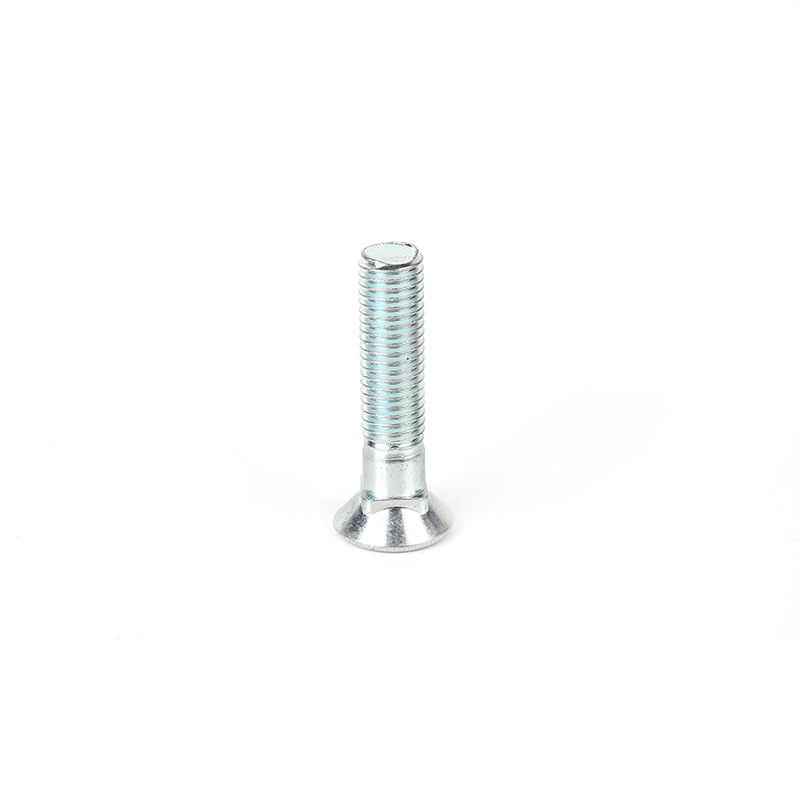 Grade 12.9 Zinc Plated Countersunk Head Square Neck Plow BoltWith a countersunk head and square neck, this high-tensile bolt sits flush in recesses and grips tightly, making it ideal for wear plates, cutting edges, and solar mounting frames.View Product →
Socket head bolts carry an internal hex drive in a cylindrical head, which makes them ideal for tight pockets and high-torque assemblies. Shoulder bolts have a precision-ground unthreaded shank that acts as a pivot pin or bearing surface. Eye bolts serve as lifting points, and U-bolts hold pipes, shafts, and cables in place. Each of these answers a narrower, well-defined requirement, and substituting one for another usually ends in an installation problem.
Head geometry decides how you install the bolt; material and grade decide whether the connection survives the load. Carbon steel and low-alloy steel cover most industrial fasteners, while 304 stainless steel is specified when corrosion resistance takes priority over maximum strength.
Metric strength grades are stamped on the head. The first digit of the grade represents the minimum tensile strength in hundreds of megapascals; the second digit represents the ratio of yield strength to tensile strength. A grade 8.8 bolt has a minimum tensile strength of 800 MPa and a yield strength of 640 MPa. Moving up to 10.9 gives 1000 MPa tensile and 900 MPa yield, and grade 12.9, at the top of the conventional scale, delivers 1200 MPa tensile and 1080 MPa yield.
| Grade | Min tensile strength (MPa) | Min yield strength (MPa) | Typical use |
|---|---|---|---|
| 4.8 | 400 | 320 | Light duty, non-structural |
| 8.8 | 800 | 640 | General machinery, automotive |
| 10.9 | 1000 | 900 | Heavy equipment, high-torque joints |
| 12.9 | 1200 | 1080 | High-strength applications, precision assemblies |
The practical implication is that a higher grade is not automatically better. Higher strength brings higher hardness and usually lower ductility, which makes the fastener more sensitive to misalignment, shock loads, and poor surface preparation.
Strength grades describe how much load a bolt can carry on day one. The surface finish determines how much of that strength remains after months of humidity, salt spray, or chemical exposure. Bright zinc plating is the most common protective layer for indoor machinery and lightly exposed structures. Hot-dip galvanizing deposits a much thicker zinc coating and is the standard for outdoor steelwork. Black oxide offers little corrosion protection but gives good lubricity and a clean appearance. For aggressive environments, stainless steel is simpler and more reliable than any coating.
For coastal plants, de-iced roads, and chemical processing lines, the difference between a zinc-plated and a stainless fastener can be measured in years of service. The same principle applies to every component in the joint; a useful review of why corrosion-resistant material selection matters in harsh environments explains how that choice plays out in practice.
Work through the selection in a fixed order so nothing is missed:
Two mistakes show up again and again in practice. The first is over-specifying strength while ignoring finish: a 12.9 bolt with a mediocre coating can fail from corrosion years before an 8.8 bolt with hot-dip galvanizing shows any damage. The second is assuming that every joint can be filled with a standard hex bolt. In photovoltaic arrays, automotive chassis brackets, and hydraulic oil-pipe connections, the installation space is often so tight, or the load path so specific, that a standard head shape cannot do the job.
That is where custom bolt manufacturing becomes the practical answer. A supplier with cold heading capacity, multiple die stations, and experience across steel and stainless grades can reproduce the required geometry with the correct strength level and finish, without turning the project into an engineering exercise.
Bolt selection is a sequence of trade-offs, not a search for the single strongest option. Head shape determines whether the bolt can be installed and serviced; thread form determines how the load is transferred; strength grade determines how much load it can carry; and finish determines how long it keeps carrying that load. Start with the application, not the catalogue: name the environment, compute the load, check tool access, and only then choose the bolt type and specification.

Fix anchorbolts include bolts, washers, nuts and 4PCS cylindrical shields. By tightening the bolts, the shields tubes expand and the components can be...
See Details
Flange bolts are specially used to tightly connect pipes and components with flanges. We produce flange bolts are solid t and durablethat, compling wi...
See Details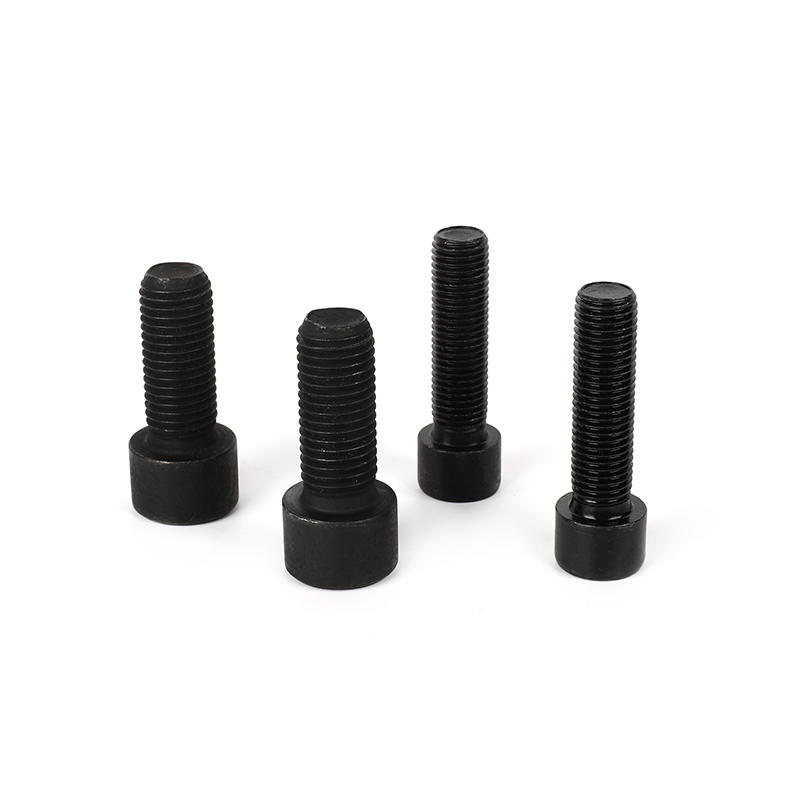
The Grade 8.8 black oxide full-thread hexagon socket bolts have an internal hex design and needs to be used with a wrench with a hex head. Its full th...
See Details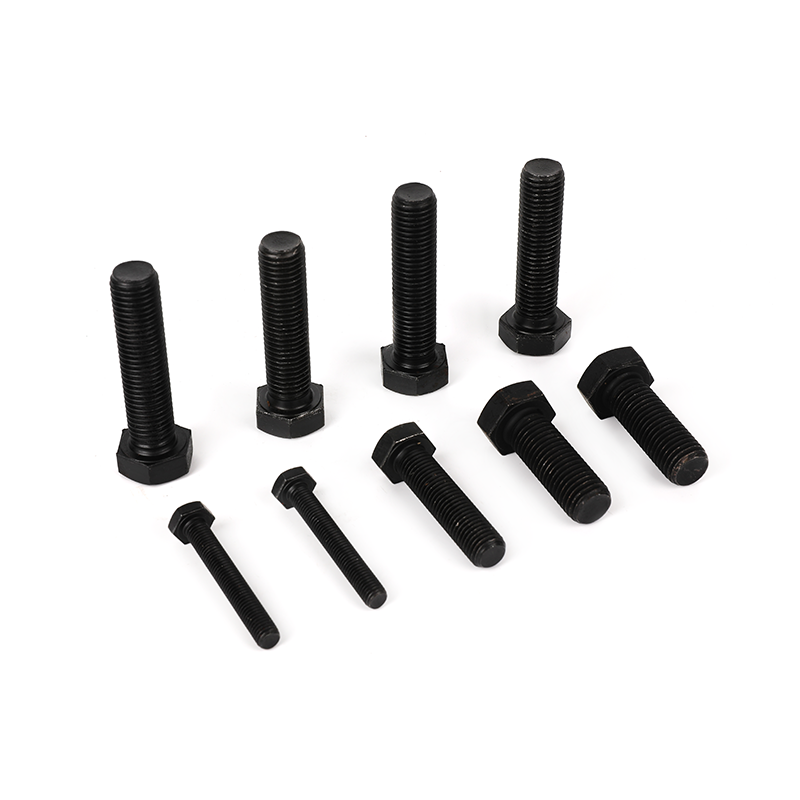
Grade 8.8 black oxide full-thread hexagon bolts is a very common fastener and requires a wrench or hex wrench to tighten it. Our hex head bolt meet th...
See Details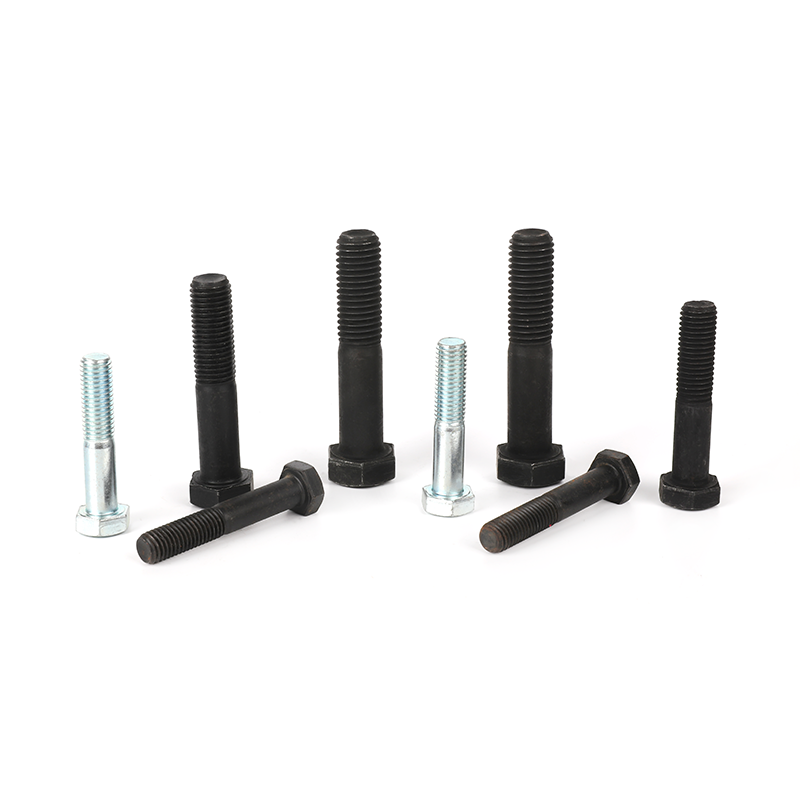
This product is made of high-quality carbon steel and undergoes a rigorous heat treatment process. It has high strength, good elasticity and toughness...
See Details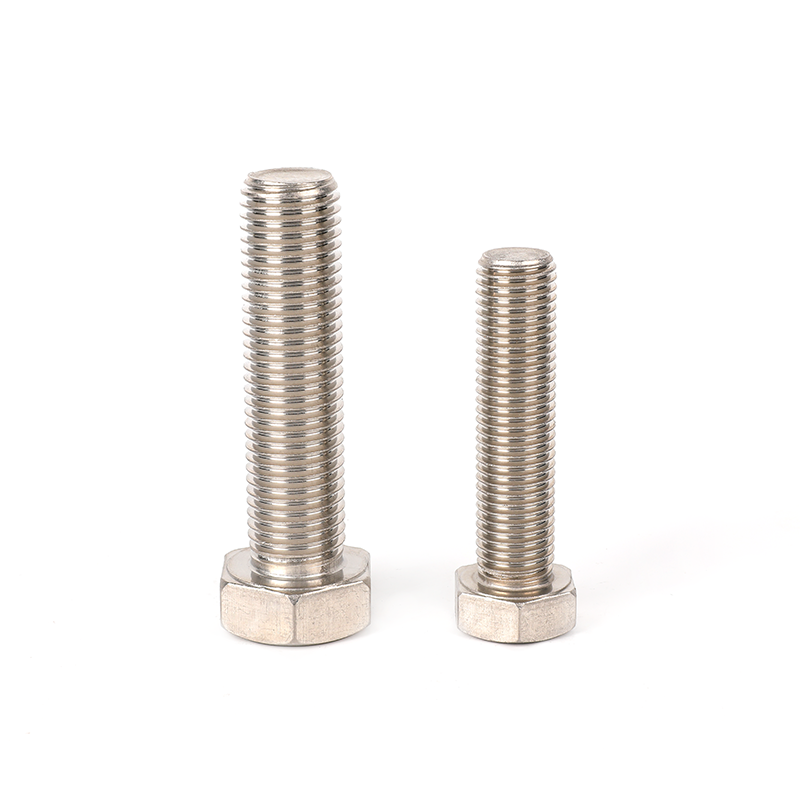
This 304 stainless steel plain full-thread hexagon bolt is a kind of fasteners made of high-quality stainless steel material and has corrosion resista...
See Details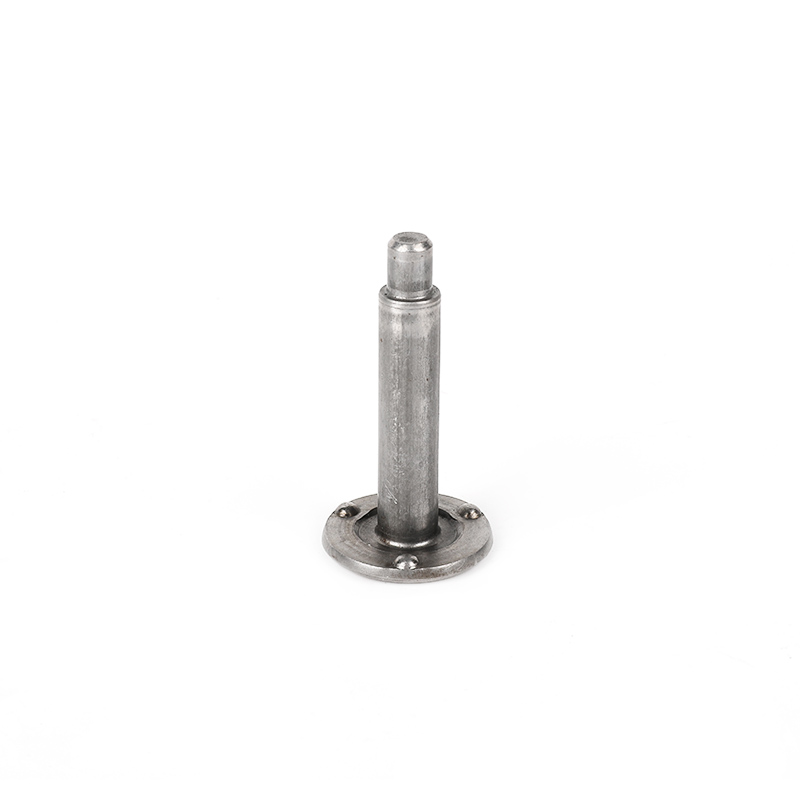
This plain round flat head weld shoulder bolt is a fastener suitable for a variety of welding applications. Its flat head and round head design makes ...
See Details
This Grade 12.9 zinc plated countersunk head square neck plow bolt has the advantages of high precision, high operability, high strength, and high ten...
See Details
Room 102, Building 13, Area A, Wanyang Zhongchuang Park, Ganyao Town, Jiashan County, Zhejiang China.
+86-17858810290
+86-573-84648787
product
mobile
