 English
 عربى
عربى
Room 102, Building 13, Area A, Wanyang Zhongchuang Park, Ganyao Town, Jiashan County, Zhejiang China.
News
Home / News / Industry News / UNF vs UNJF Threads: Key Differences, Fatigue Life, and Selection Guide
When a turbine access door specification changed from 1/4-28 UNF to 1/4-28 UNJF, the purchasing team quickly learned that the two bolts were not the same part. The pitch, major diameter, and wrench size all looked identical, yet the UNJF bolt carries a controlled root radius that a standard UNF bolt does not. That single geometric detail changes fatigue life, stress distribution, gaging, and unit price.
In short, UNJF is a fine-pitch unified thread built for fatigue-critical applications, while UNF is the general-purpose fine thread used across most of industry. Choose UNJF when cyclic or vibrating loads dominate; choose UNF when cost, availability, and simplicity matter more. The sections below explain the practical differences in design, inspection, and sourcing.
Content
UNF stands for Unified Fine thread, a 60-degree V-form defined by ASME B1.1. For a given nominal diameter, a UNF thread has a smaller pitch than the corresponding Unified Coarse (UNC) thread. That gives it a larger tensile stress area, better resistance to backing out under many vibration conditions, and finer control during tensioning.
The external root of a standard UNF thread is flat or only slightly rounded. Production tooling determines the exact geometry, and the root radius is neither large nor closely controlled. For a typical industrial bolt, that is completely adequate: static loads, moderate vibration, and occasional service rarely create fatigue problems at the thread root.
UNF appears in hydraulic manifolds, pumps, automotive brackets, agricultural equipment, machine tools, and general structural joints. Fasteners, tooling, and gages are stocked worldwide in a wide range of sizes and materials.
UNJF is a Unified Fine thread with a J-form root, defined by ASME B1.15. The external thread root is produced with a controlled radius between 0.150P and 0.180P, where P is the thread pitch. For a 1/4-28 UNJF thread, P is 0.0357 inches, so the root radius falls between about 0.0054 and 0.0064 inches; noticeably larger and far more consistent than the root of a standard UNF thread.
What does the larger radius change, and why is the extra cost justified? A sharp or small root acts as a local notch. Under cyclic loading, cracks tend to initiate at exactly that point. The controlled J-form radius smooths the stress transition, spreads the load over a larger surface, and also gives the bolt a slightly larger cross section at the root. The result is a measurable improvement in fatigue life.
Internal UNJF threads are cut with a slightly enlarged minor diameter so the lobe of the large external root radius does not collide with the internal crest. Even when the pitch diameter class is the same, a UNJF internal thread needs different tooling than a UNF internal thread.
Typical UNJF applications include engine components, gearbox joints, pump assemblies, and other aerospace or military hardware where an OEM has written a fatigue requirement into the maintenance plan.
The table below summarizes the points that matter most for design and procurement.
| Characteristic | UNF | UNJF |
|---|---|---|
| Governing standard | ASME B1.1 | ASME B1.15 |
| External root radius | Small, flat or rounded | Controlled, 0.150P to 0.180P |
| Stress concentration | Higher at the root | Lower, smoother transition |
| Fatigue resistance | Baseline for general duty | Substantially higher under cyclic loads |
| Internal thread minor diameter | Standard per B1.1 | Enlarged for root clearance |
| Typical applications | General machinery, hydraulics, automotive | Aerospace, defense, high-vibration equipment |
| Price and availability | Widely stocked, lower cost | Specialty, longer lead times, higher cost |
Fatigue life is the most significant difference. The larger root radius lowers the stress concentration factor at the thread root, so cracks take longer to initiate under cyclic loads. Load distribution along the engaged threads also becomes more uniform, which helps when short engagement lengths cannot be avoided.
UNF threads are checked against the ASME B1.1 profile with standard go and no-go gages. UNJF threads must be verified against the ASME B1.15 profile. If a supplier uses only UNF gages to inspect a UNJF part, the part can pass a pitch diameter check and still have a root radius far below specification. Confirm the J-form gage before authorizing production.
UNF fasteners are commodity parts in most sizes; they are stocked, inexpensive, and quick to source. UNJF fasteners are specialty items because fewer manufacturers run J-form tooling, gages cost more, and lead times are longer. In small quantities the price gap is often negligible; in production volumes it is real.
Because both thread forms share the same pitch, diameter, and 60-degree angle, they often thread together in a bench test. A UNF external thread generally enters a UNJF internal thread, and a UNJF bolt will usually start into a UNF nut. None of that proves that the mixed assembly is safe to use.
The fit classes and tolerances are defined differently. A UNF bolt in a UNJF joint brings back the very stress concentration that the UNJF design was chosen to eliminate. A UNJF bolt forced into a UNF internal thread can bind at the crest and create a contact pattern different from the design intent. Standards do not treat a mixed assembly as equivalent to a full UNJF joint, and a maintenance manual that asks for UNJF should be followed literally.
If a UNJF part is unavailable, a UNF part may keep the machine running temporarily, but the repair should be tracked and replaced at the next scheduled maintenance. Permanently changing the thread form means changing all mating components to the same form and verifying the assembly with the correct gages. Never assume that a similar pitch means similar performance.
A controlled root radius cannot compensate for a weak material. Fatigue performance is a combined result of thread form, material, heat treatment, surface condition, and assembly torque. A grade 8.8 bolt with UNJF is a defensible choice for many industrial frames, while a low-carbon fastener with UNJF is still a low-carbon fastener. When you order for a fatigue-sensitive joint, specify the full material and strength package, not only the thread symbol. For a proven combination of strength and availability, many production programs already use grade 8.8 black oxide full-thread hex head bolts, which a competent factory can supply in UNF or UNJF form with the correct tooling.
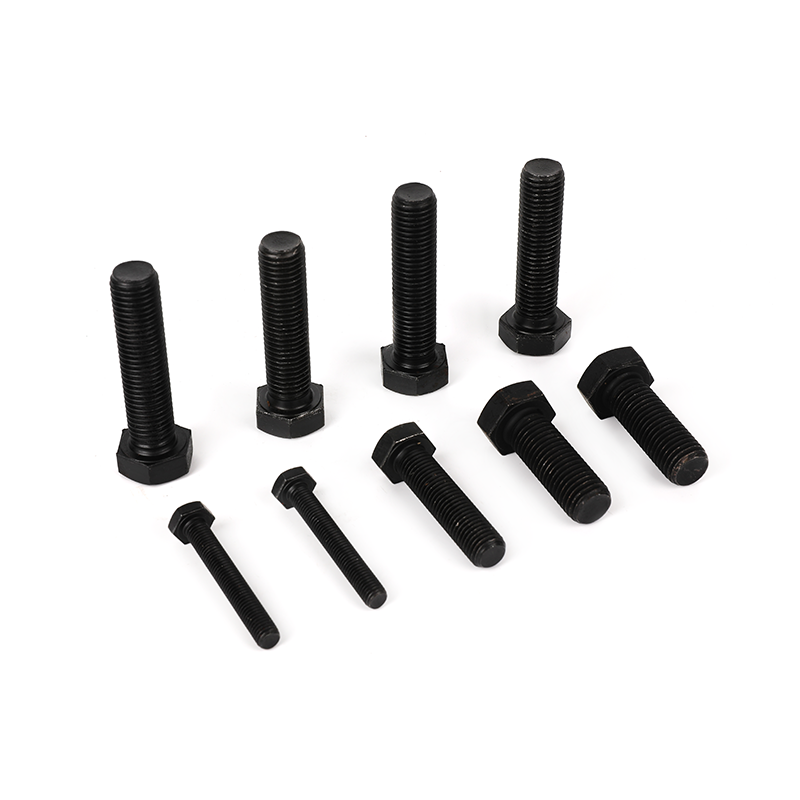 Grade 8.8 black oxide full-thread hexagon bolts, hex head bolt Manufacturers, SuHongyan Technology Manufacturing - China Grade 8.8 black oxide full-thread hexagon bolts, hex head bolt Manufacturers, Suppliers and Fact...View Product →
When you build an order, the thread form is only one line of the specification. Send the full thread designation (for example, 3/8-24 UNJF-3A), material grade, strength class, surface finish, plating thickness, and the gaging requirement. A fastener factory that sees a complete specification can prevent a common failure mode: a plated UNJF bolt whose root radius changes because the plating thickness was not taken into account.
Material selection deserves the same attention. In a humid or outdoor environment, 304 stainless steel full-thread hex head bolts resist corrosion and keep their geometry stable, while zinc-plated carbon steel is better suited to dry indoor assemblies. If the service environment is aggressive, review why material corrosion resistance matters in harsh environments before finalizing the surface treatment.
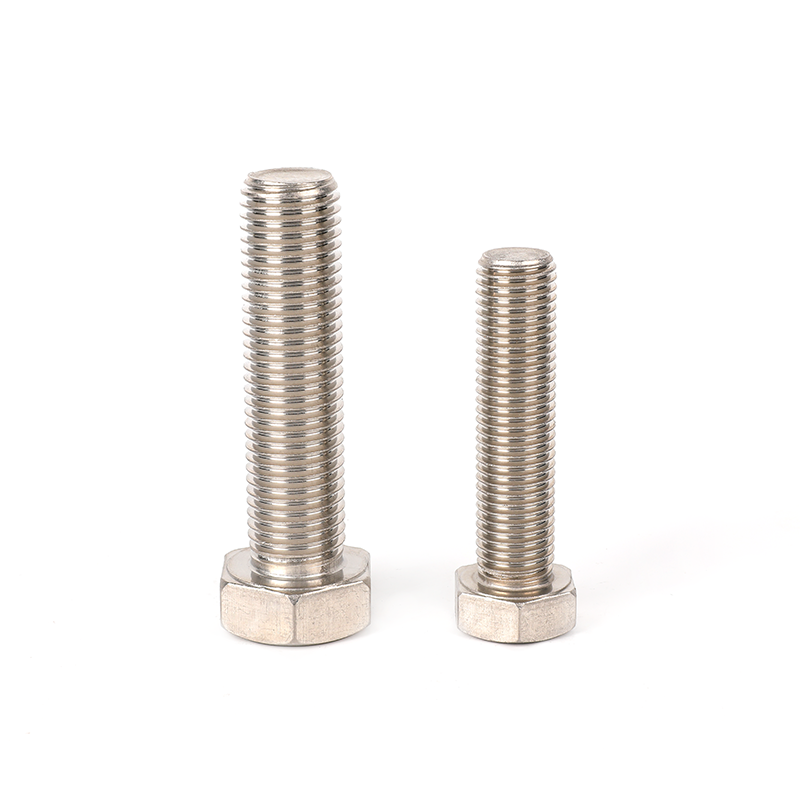 304 stainless steel plain full-thread hex head bolt, hexagon bolts ManufacturersHongyan Technology Manufacturing - China 304 stainless steel plain full-thread hex head bolt, hexagon bolts Manufacturers, Suppliers and ...View Product →
When the required size or head style is not on the shelf, the most practical route is to work with a producer that combines standard stock with custom fastener manufacturing. The factory reviews the drawing, confirms that the J-form root radius is feasible with selected tooling and material, and suggests a different heat treatment or plating when the tolerance is tight. That feedback loop matters most for UNJF parts, because gage availability and root geometry decide whether the order passes inspection. A factory-direct production team with fifteen years of experience in standard and non-standard fasteners shortens that loop further, since the people making the part are the same people answering your questions.
The difference between UNF and UNJF is not a marketing story; it is a measurable change in the thread root. For most general engineering, UNF does the job and does it cheaply. For fatigue-limited designs, UNJF delivers a real improvement in crack resistance and load distribution. Specify the exact thread form, choose the right material grade and coating, and verify the root radius with the correct gage. A fastener that passes inspection against the right standard will perform exactly as the drawing demands.
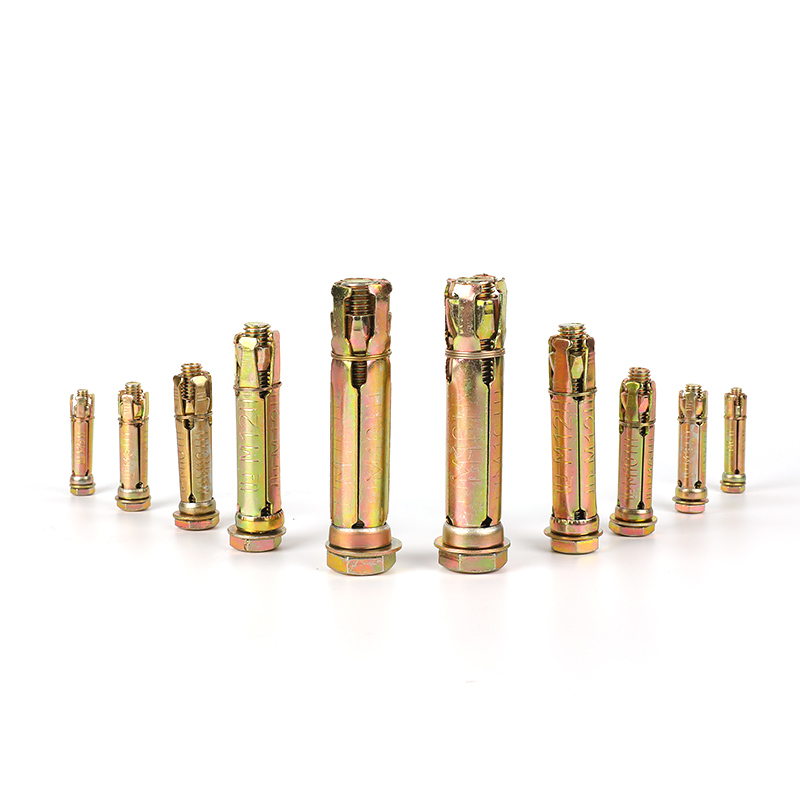
Fix anchorbolts include bolts, washers, nuts and 4PCS cylindrical shields. By tightening the bolts, the shields tubes expand and the components can be...
See Details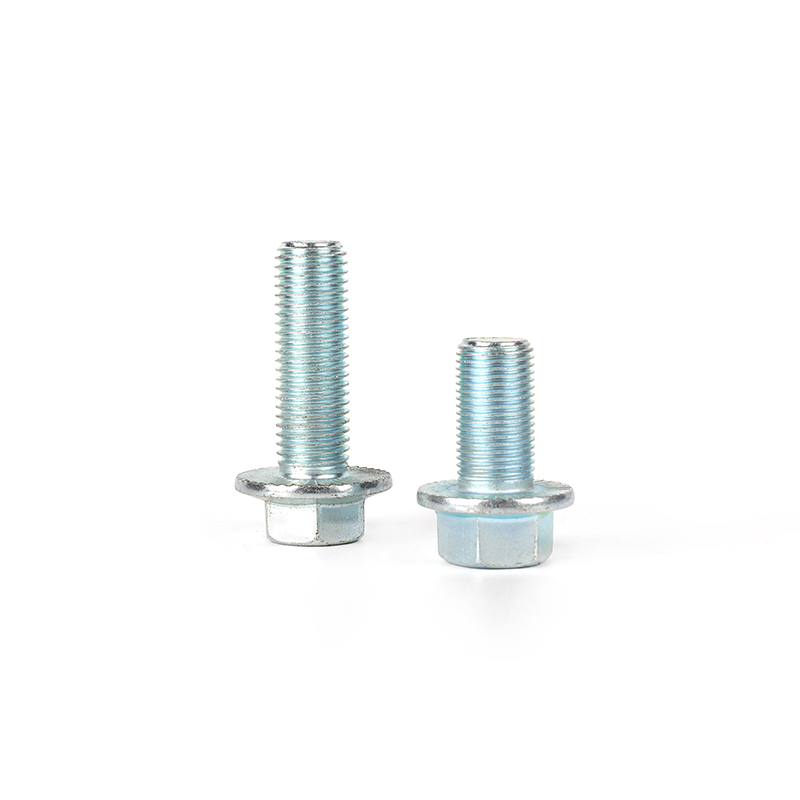
Flange bolts are specially used to tightly connect pipes and components with flanges. We produce flange bolts are solid t and durablethat, compling wi...
See Details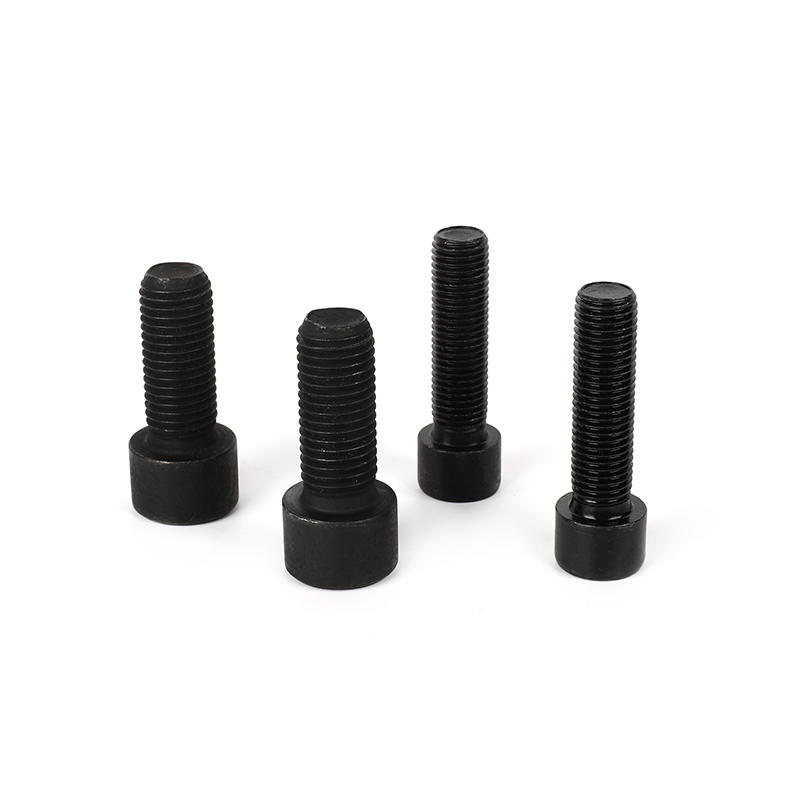
The Grade 8.8 black oxide full-thread hexagon socket bolts have an internal hex design and needs to be used with a wrench with a hex head. Its full th...
See Details
Grade 8.8 black oxide full-thread hexagon bolts is a very common fastener and requires a wrench or hex wrench to tighten it. Our hex head bolt meet th...
See Details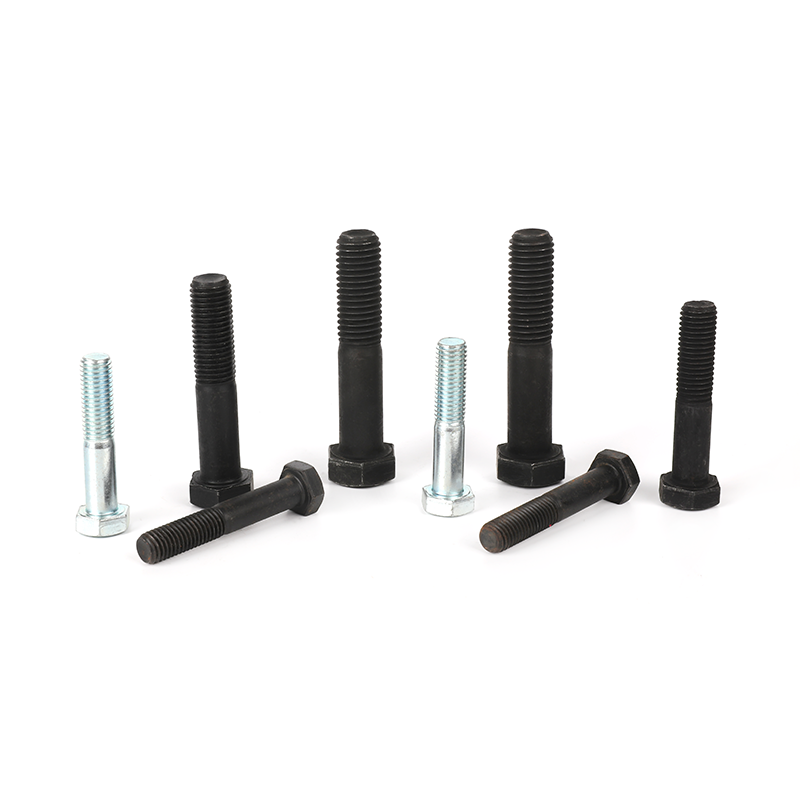
This product is made of high-quality carbon steel and undergoes a rigorous heat treatment process. It has high strength, good elasticity and toughness...
See Details
This 304 stainless steel plain full-thread hexagon bolt is a kind of fasteners made of high-quality stainless steel material and has corrosion resista...
See Details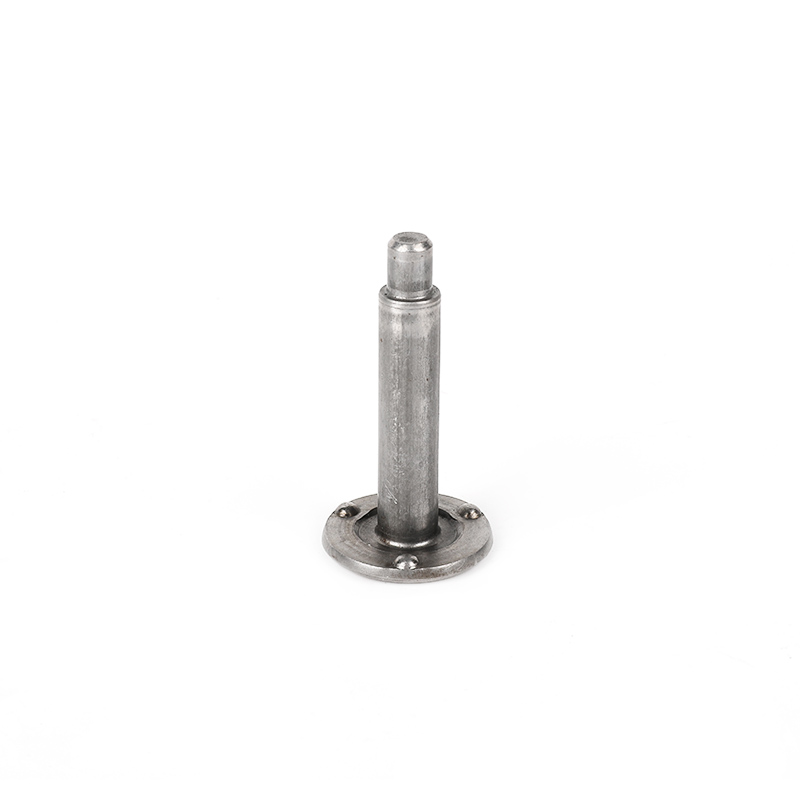
This plain round flat head weld shoulder bolt is a fastener suitable for a variety of welding applications. Its flat head and round head design makes ...
See Details
This Grade 12.9 zinc plated countersunk head square neck plow bolt has the advantages of high precision, high operability, high strength, and high ten...
See Details
Room 102, Building 13, Area A, Wanyang Zhongchuang Park, Ganyao Town, Jiashan County, Zhejiang China.
+86-17858810290
+86-573-84648787
product
mobile
