 English
 عربى
عربى
Room 102, Building 13, Area A, Wanyang Zhongchuang Park, Ganyao Town, Jiashan County, Zhejiang China.
News
Home / News / Industry News / Bolt Anatomy: Understanding Head, Shank, Threads, Point, and Drive for Better Fastening
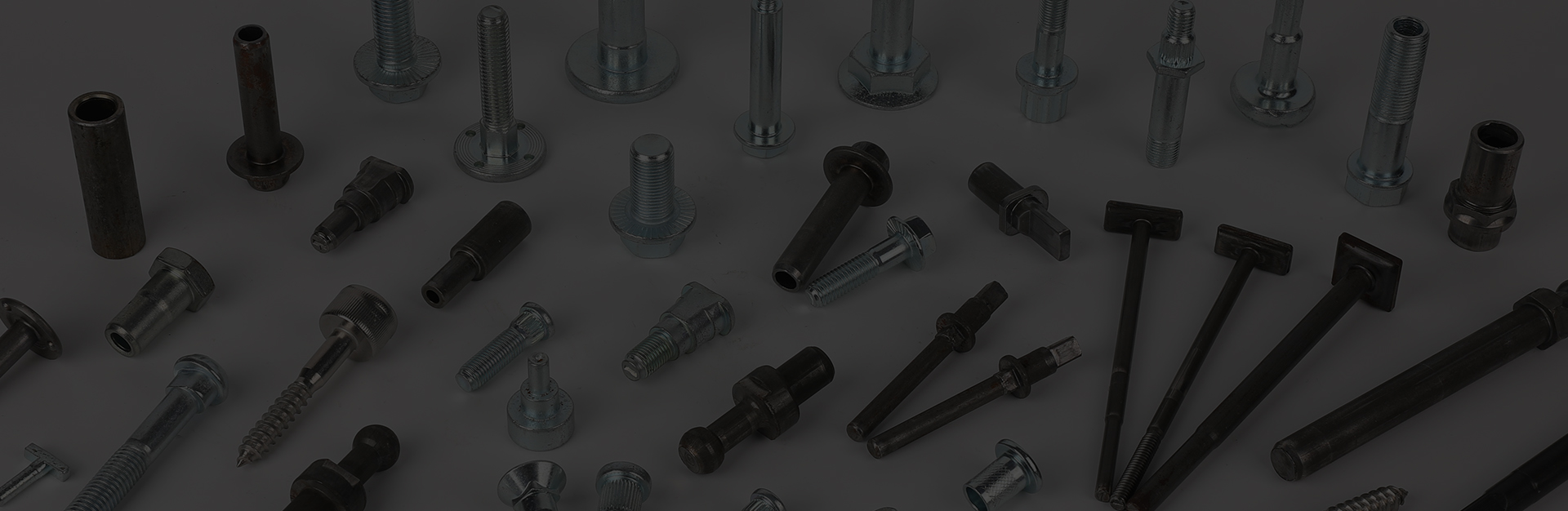
An M12 bolt with a 40 mm length is ordered, but the threads only start at the last 15 mm. When the joint is tightened, the nut runs out of thread before the parts are clamped. This is not a material problem; it is an anatomy problem. A bolt's head, shank, threads, point, and drive each have a specific job. If the geometry does not match the joint, even a Grade 12.9 bolt will fail to hold. Understanding the anatomy of a bolt lets you specify the exact combination of head, grip length, thread pitch, and finish that will perform reliably.
Content
Bolt heads are not just for turning. The head transfers clamping force into the joint and prevents the bolt from pulling through the connected material. Hex heads are the most common because they accept a wrench from six angles, but flange heads add a built-in washer that distributes load over a larger area. Socket heads use a hex recess for compact spaces, while T-heads and plow heads are shaped to lock into slots.
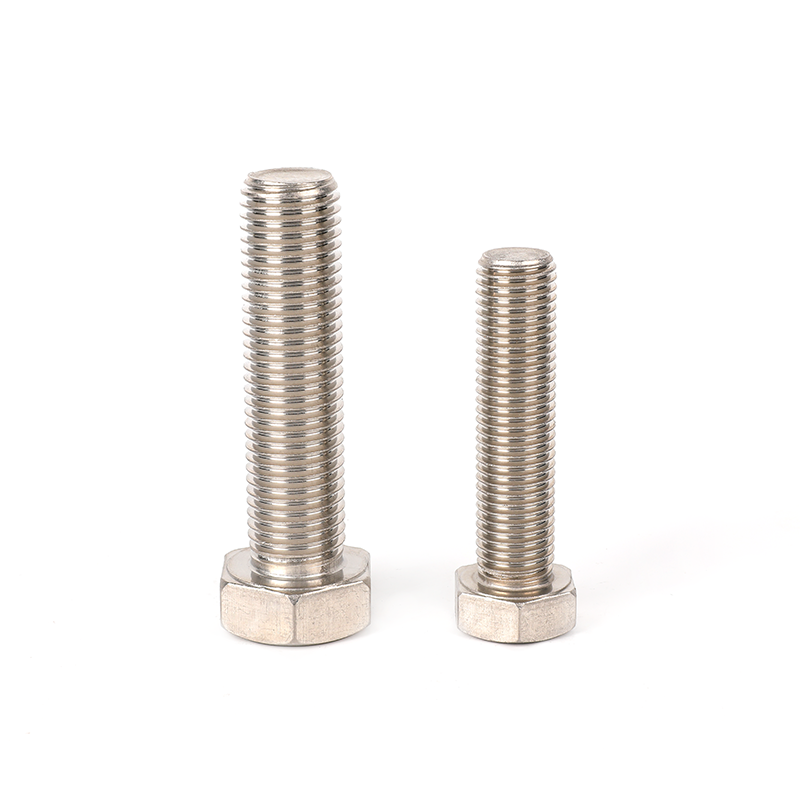 304 Stainless Steel Full-Thread Hex Head Bolt for Corrosion-Resistant FasteningThis plain hexagon bolt in 304 stainless steel provides corrosion and oxidation resistance, with a full thread for easy installation. Its external hex head accommodates standard wrenches, making it a reliable choice for general mechanical assemblies.View Product →
The drive is the shape that transfers torque from the tool to the bolt. External drives include hex, square, and 12-point; internal drives include socket, Torx, and slot. Each drive has a different torsional capacity and stripping risk. A hex head is practical because a wrench can grip it from six directions, but in a limited-access joint an internal socket head may be the only option. When you specify a drive, consider the torque level: an internal hex drive can strip if the socket is undersized or if the bolt is over-tightened. A flange head on a vibrating machine reduces washer requirements and improves preload retention, while a standard hex head with a full thread works for general assembly.
The shank is the body of the bolt between the head and the point. In a partially threaded bolt, the smooth portion is called the grip length. This grip length sits inside the connected members when the bolt is tightened. If the grip is too long, the threads never reach the nut and the joint remains loose. If the grip is too short, the threaded section is compressed inside the hole, where bending stress is more likely to concentrate.
| Feature | Full-thread bolt | Partial-thread bolt |
|---|---|---|
| Thread coverage | Entire shank | Only near the point or head |
| Grip length | Very short | Fixed unthreaded section |
| Common use | Short clamping distances, tapped holes | Through-hole bolted joints |
| Fatigue behavior | More stress concentration at threads | Smoother shank reduces stress risers |
Measure the grip length from the underside of the head to the first full thread. For a partial-thread bolt, the unthreaded shank should be equal to the thickness of the clamped plates. If the shank is longer than the plate stack, the bolt will bottom out before the nut is fully tightened. If the shank is shorter, the threads will bear across the joint and may strip under fatigue. For standard hex bolts, the shank diameter is usually the same as the thread major diameter. In a reduced-shank bolt, the shank is smaller than the thread, allowing a slight misalignment or reducing weight.
Threads are the spiral ridges that turn a bolt into a load-bearing component. The major diameter is the largest cylinder of the thread; the minor diameter is the smallest. Pitch is the distance between adjacent peaks, and in imperial bolts threads per inch (TPI) is used instead. Coarse threads have a larger pitch than fine threads for the same diameter.
Thread form also determines how loads transfer. A typical 60-degree metric thread is strong and easy to manufacture, but buttress or square threads carry higher axial loads in one direction. For most industrial bolts, the practical choice is coarse for general fastening and fine for fatigue or vibration resistance. Matching the thread class exactly between bolt and nut prevents binding or overstress. Thread class defines the tolerance band: in metric bolts, a 6g external thread and a 6H internal thread are standard. If you pair a 6e thread with a 6H nut, the clearance is larger, which can reduce stripping but also increase backlash. For vibration-critical joints, a closer fit such as 6g/6H is preferred.
The point is the seat of the tip. A flat point with a chamfer is standard for bolts designed to thread into a nut. A dog point has a cylindrical pilot that aligns the bolt in a predrilled hole. A cone point or cup point is used in screw applications for locking. In custom bolts, the point can be machined for self-threading or for easy entry into welded or tapped holes. For a standard hex bolt, the point is chamfered to avoid cross-threading; for an application where the bolt passes through two parts, a dog point can guide assembly. End geometry becomes especially important when bolts are installed blind or through misaligned holes, because a chamfer or dog point prevents scraped threads and damaged coatings.
Bolt anatomy is not limited to geometry. The steel grade, treatment, and coating determine how the same shape performs under environment. Carbon steel bolts in grade 8.8 are common for general machinery, while 10.9 and 12.9 are selected for higher preload. Stainless steel 304 offers corrosion resistance but has different torque requirements. Zinc plating, black oxide, and hot-dip galvanizing change the friction coefficient, so the same head geometry can produce different clamp loads if the coating is different. The coefficient of friction on a zinc-plated bolt is roughly 0.14 to 0.20, while a black oxide finish may be 0.12 to 0.18; this affects the relationship between tightening torque and clamp load.
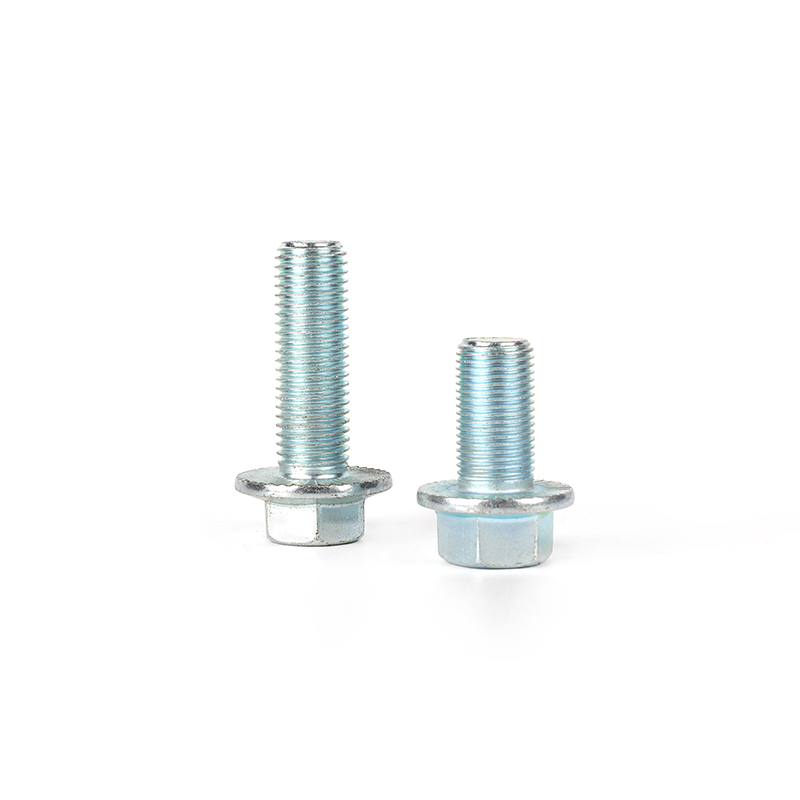 Grade 10.9 Zinc Plated Flange Bolt with Anti-Slip TextureThese flange bolts feature a Grade 10.9 strength and zinc plating, with an anti-slip texture that improves tightening. They meet DIN-6921 and GB standards, suitable for flange connections where reliable preload is needed.View Product →
A non-standard bolt can combine a custom head, shank, thread, or point with a specific grade and finish. For example, a wheel hub screw with a knurled flat head or a shoulder bolt for a vehicle bracket is shaped to solve a specific assembly issue. Surface texture, such as antislip knurling on a flange bolt, can also change how the bolt feels when tightened and how it resists loosening. In harsh environments, the choice between zinc plating and black oxide is not cosmetic; one offers sacrificial protection, the other offers a low-friction finish, and the bolt anatomy must be specified together with that decision.
When a standard catalog 8.8 hex bolt cannot meet the available space or torque requirement, the anatomy must be adapted. A hollow hex bolt for an oil line allows fluid passage through the center. A T-shaped square head bolt for photovoltaic mounting locks into a slotted frame. A shoulder bolt for an electric vehicle side bracket provides a precise pivot axis. These parts are produced by cold heading or machining, and each zone is controlled separately.
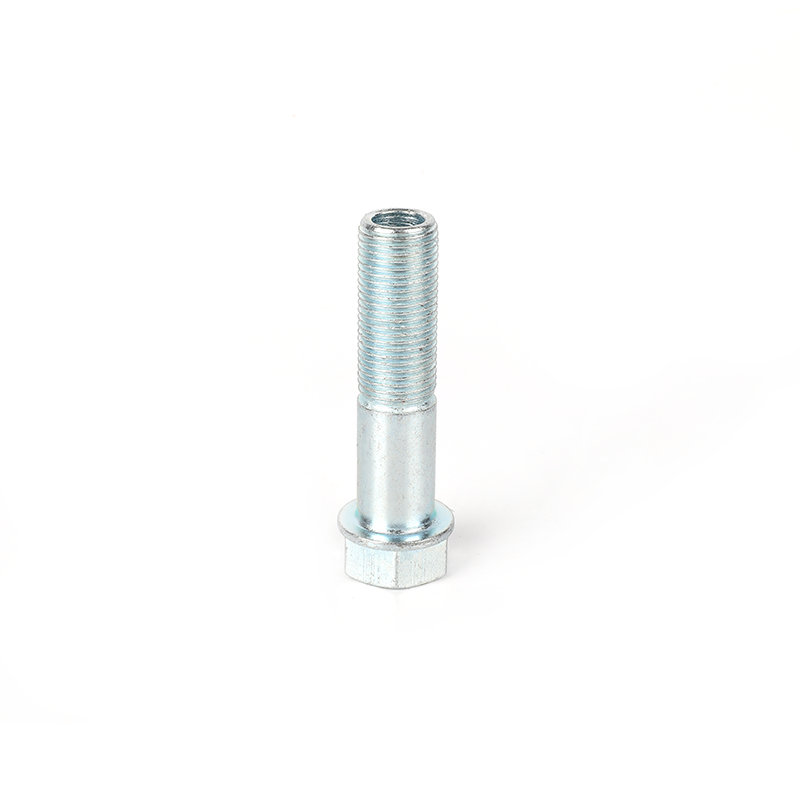 Customized Hollow Hexagon Bolt with Washer for Oil Pipe ApplicationsThis specialized bolt features a hollow center for fluid passage, half-thread design, and bright zinc plating. The hexagonal head with washer enhances sealing and torque application, ideal for oil lines in mechanical assemblies.View Product →
Working with a manufacturer that controls its own molds gives you the freedom to change head height, shank diameter, thread pitch, and point length without treating the bolt as a black box. Jiashan Hongyan Technology Manufacturing Co., Ltd. operates as a factory and trading company combined, with 15 years of experience and six or more molding stations, so custom bolt anatomy can be quoted and produced in a single line. To understand more about our production background, visit our company profile. If you are evaluating a custom non-standard part, see our custom fastening capabilities before sharing drawings.
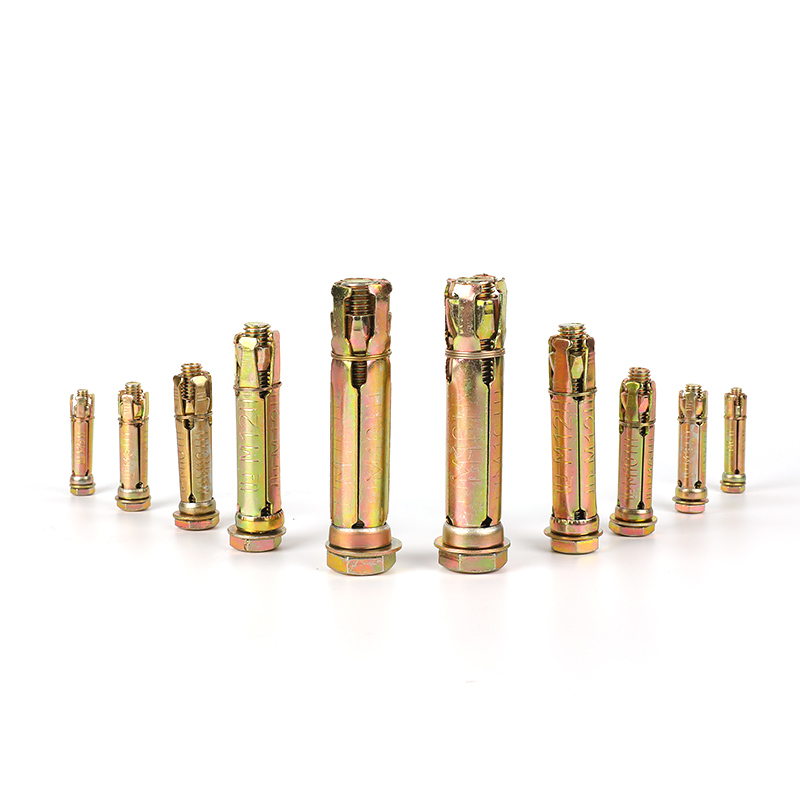
Fix anchorbolts include bolts, washers, nuts and 4PCS cylindrical shields. By tightening the bolts, the shields tubes expand and the components can be...
See Details
Flange bolts are specially used to tightly connect pipes and components with flanges. We produce flange bolts are solid t and durablethat, compling wi...
See Details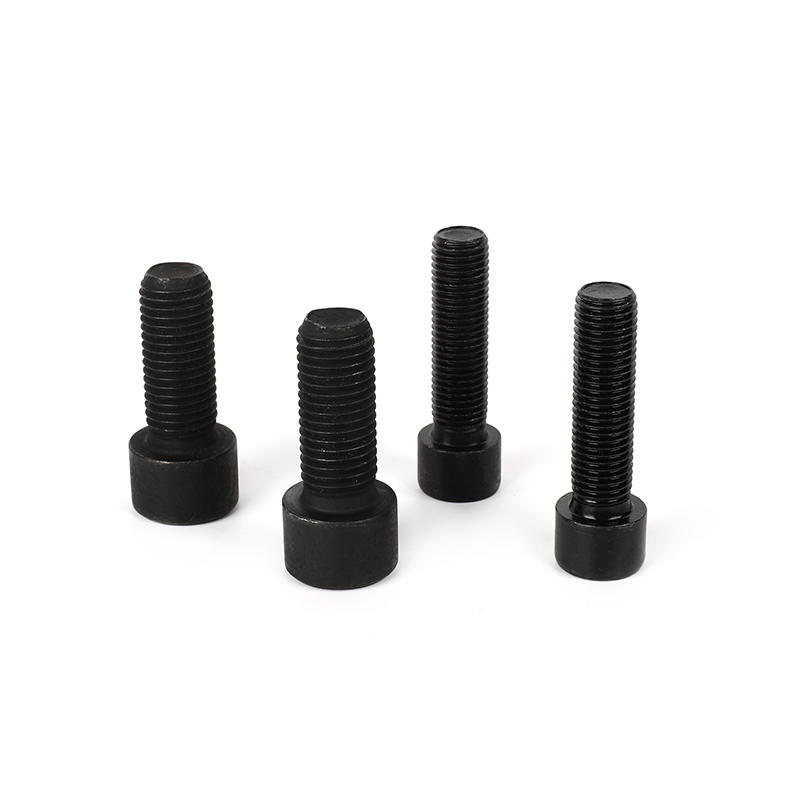
The Grade 8.8 black oxide full-thread hexagon socket bolts have an internal hex design and needs to be used with a wrench with a hex head. Its full th...
See Details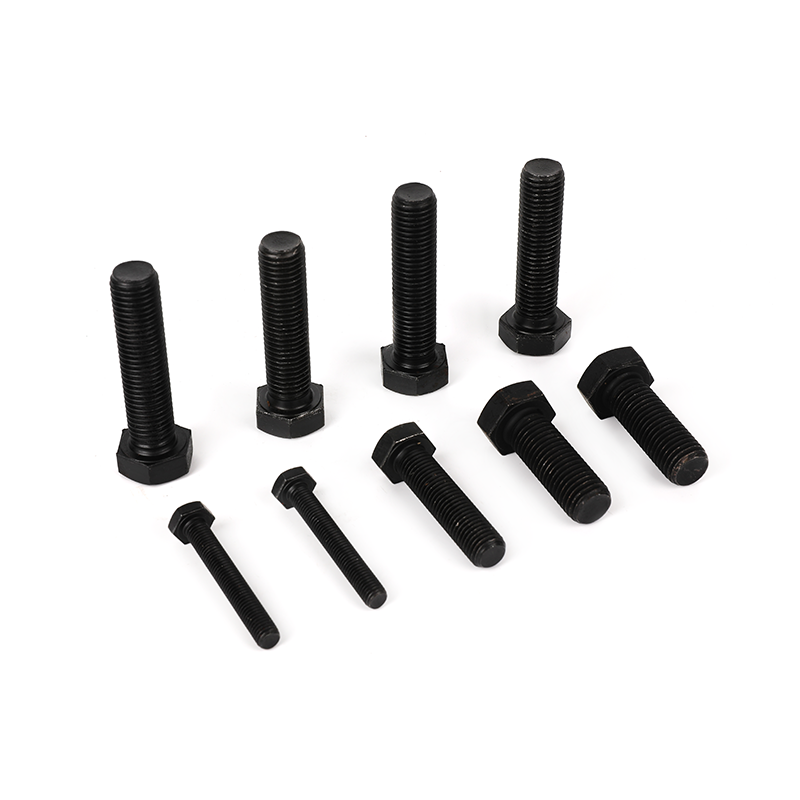
Grade 8.8 black oxide full-thread hexagon bolts is a very common fastener and requires a wrench or hex wrench to tighten it. Our hex head bolt meet th...
See Details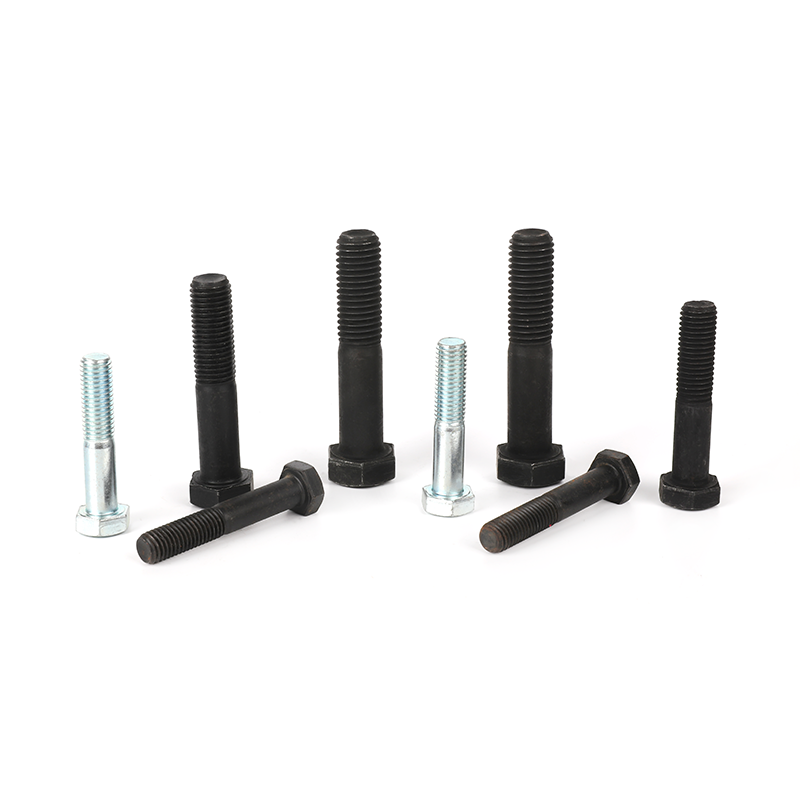
This product is made of high-quality carbon steel and undergoes a rigorous heat treatment process. It has high strength, good elasticity and toughness...
See Details
This 304 stainless steel plain full-thread hexagon bolt is a kind of fasteners made of high-quality stainless steel material and has corrosion resista...
See Details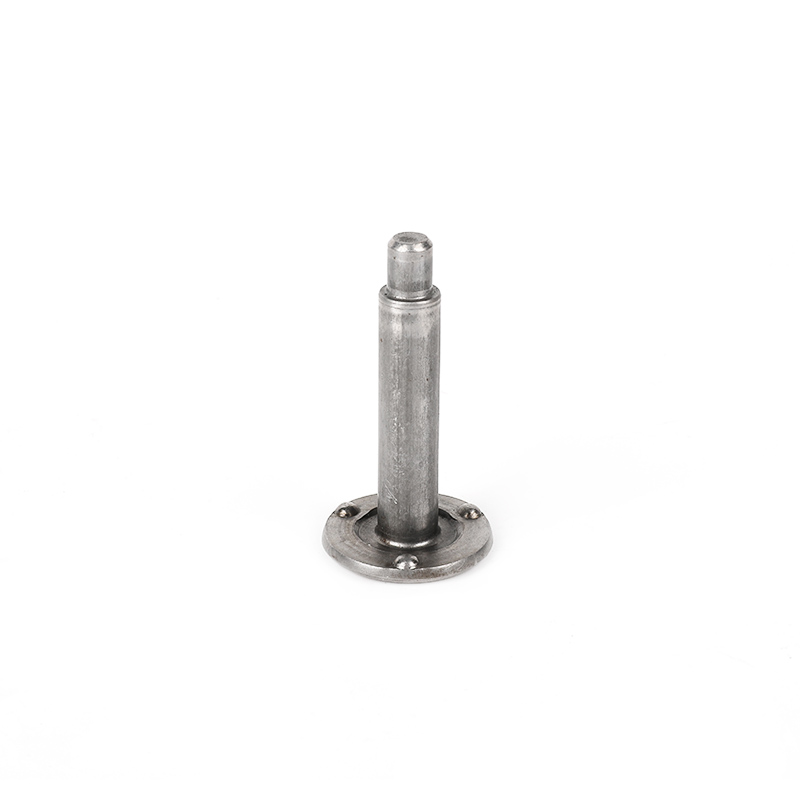
This plain round flat head weld shoulder bolt is a fastener suitable for a variety of welding applications. Its flat head and round head design makes ...
See Details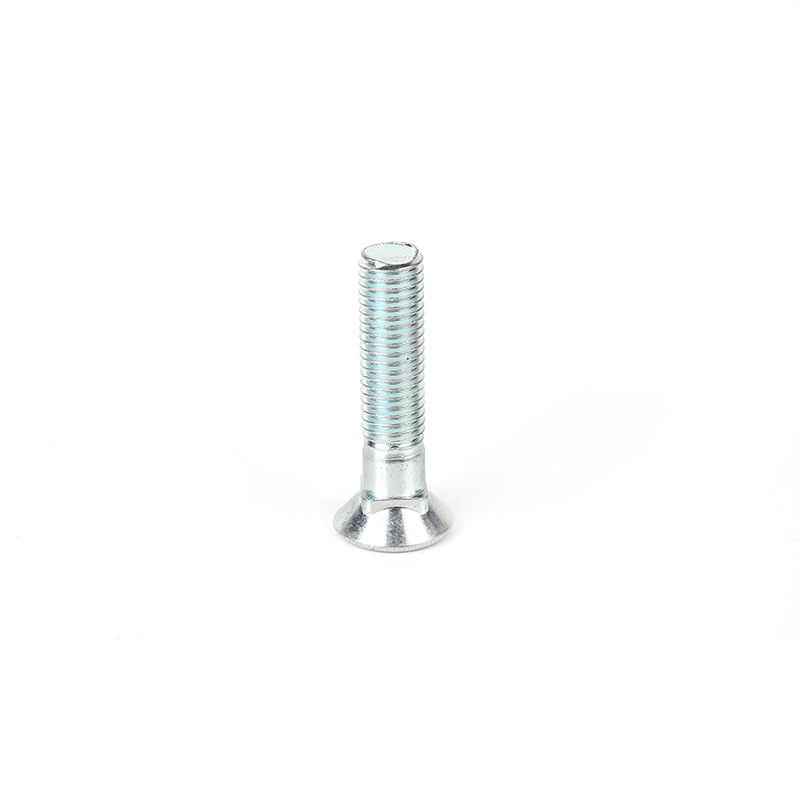
This Grade 12.9 zinc plated countersunk head square neck plow bolt has the advantages of high precision, high operability, high strength, and high ten...
See Details
Room 102, Building 13, Area A, Wanyang Zhongchuang Park, Ganyao Town, Jiashan County, Zhejiang China.
+86-17858810290
+86-573-84648787
product
mobile
